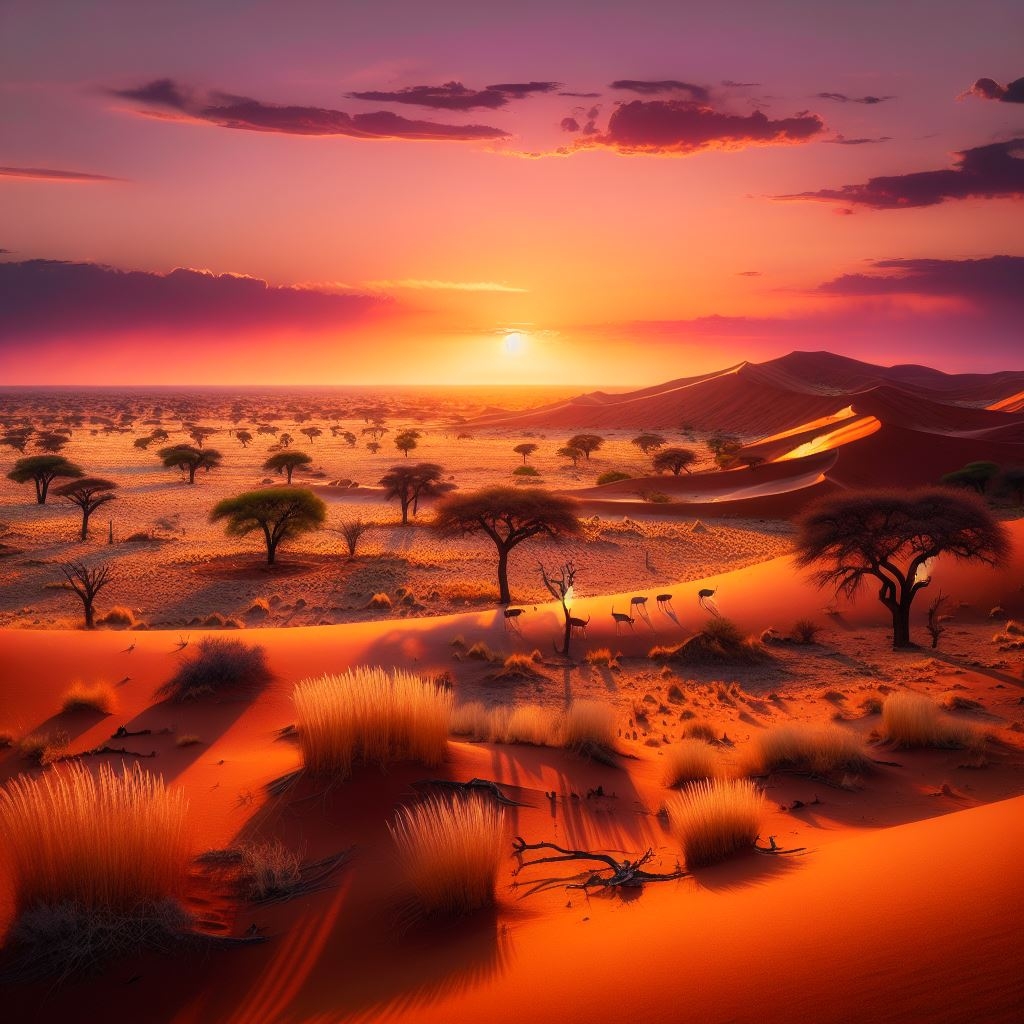
Africa time
After only a few days here, the concept of “Africa time” has well and truly sunk in. You may be familiar with the manãna principle in Spain – anything and everything is a tomorrow problem. Africa time is similar, but you are given a scheduled time, that really doesn’t mean anything. Our tour of Windhoek was scheduled for 2pm, but they turned up at 9am (after trying to insist we were booked for 2pm the day before, when we were still at the airport!). Today, we had a transfer booked for 9am to take us to collect our hire car. By 9.30 it had not arrived, and we had to phone to chase – explanation? Africa Time!
We eventually got to the car hire office and spent an hour having a full demonstration on the dos and don’ts of driving in Namibia. Car pick up completed (Toyota Hilux Raider Automatic Diesel for those that are interested), we stopped off at the local mall to get some snacks and water to store in the car. (The mall itself was a bit of a change from the UK – it was full of shops! Not a vacant unit in sight).
Car stocked up, we hit the road, finally leaving Windhoek at around 1pm
Driving from Windhoek to the Kalahari
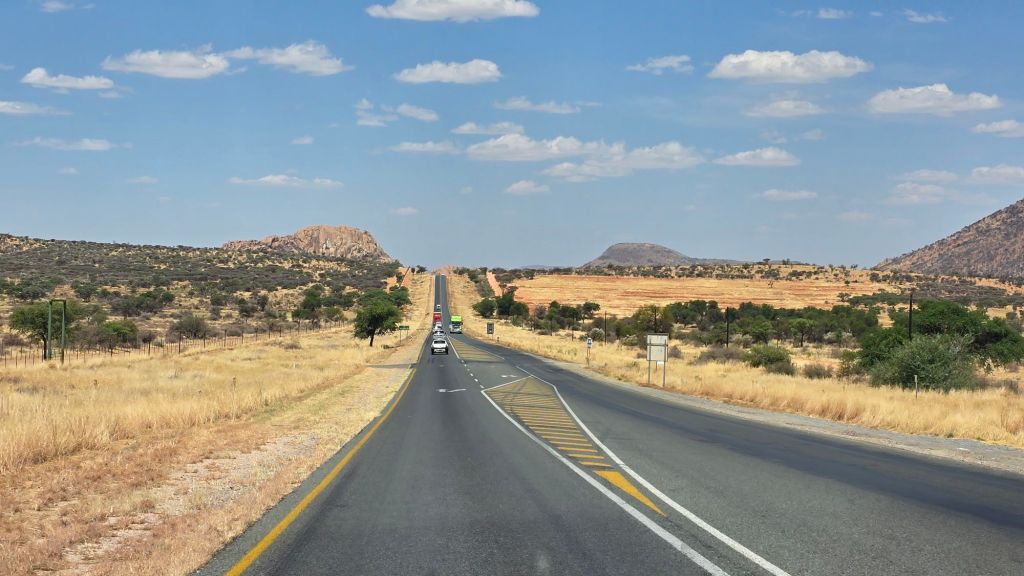
Namibians drive on the left, which makes life much easier for us Brits to handle. Speed limits vary according to the road types but generally it’s 75mph on good tarred roads, down to 37mph on the gravel roads.
Rules of the car hire included no driving in the dark (except between a couple of coastal towns), and headlights are to be kept on whilst driving at any time of day. Roads are long and there’s often nothing to stop at along the way.
The 190 mile journey started off on well-tarred roads, but the tar had started to degrade the further out of town we got, and the final 30 miles of road were gravel roads – very bumpy and slow. But being slow had its blessings, as we spotted a few animals along the way – an African Ground Squirrel, a Springbok, and a couple of Ostriches, as well as a few birds for Phil’s tick list.
The final few miles were just on sand tracks inside the ranch – even slower and bumpier, and we finally arrived at the ranch at 5pm.
Evening game drive
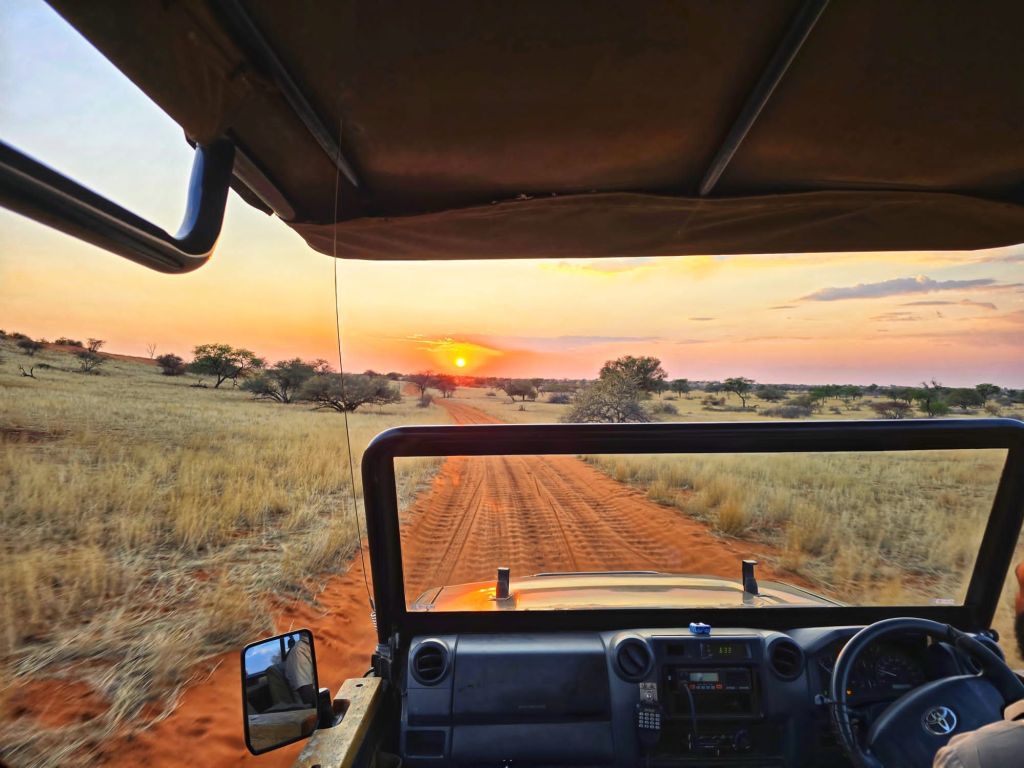
Dinner was served from 7pm, and at 8.30pm we set out for our first game drive of the trip – a 1.5 hour evening drive.
It was slightly disappointing, as our driver was so intent of finding a rhino that had been reported as being seen that he was dismissive of other animals around the 7,000 hectare ranch. Animals we saw included:
South African Spring Hare, Springbok, Oryx, Cape Fox, Steenbok, Small-Spotted Genet, and Cape Hare.
Morning game drive
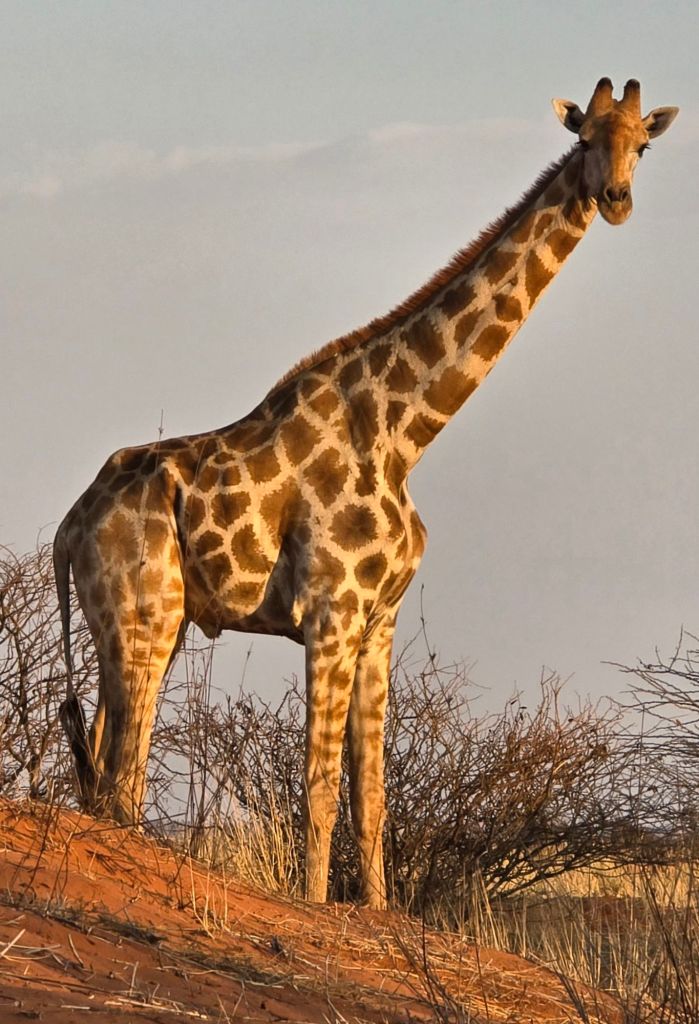
Up early the next morning, we had a much more positive experience of a game drive from this ranch with a 2 hour morning drive (6.30 am start). The guide was friendly and happy to stop for anything we wanted to see. A much more productive morning with sightings of:
Bat-eared Fox, Plain Zebras, Southern Giraffes, Black and Blue wildebeest, White Rhinos (including a baby), Springboks, and Oryx.
Back at the ranch for breakfast, a rest and a chilled afternoon by the pool before dinner.

Bushman Walk
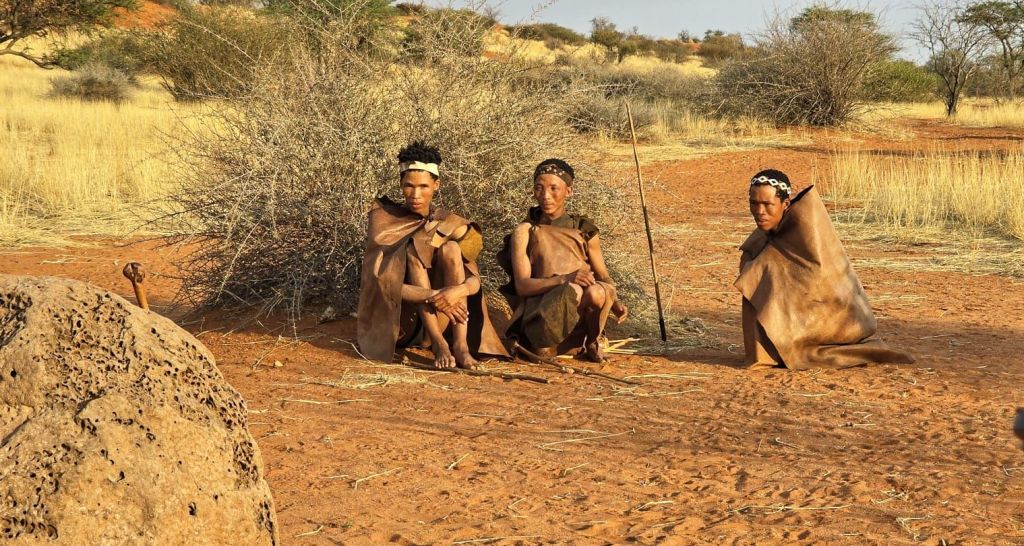
Another early morning start took us on an interpretive Bushman’s walk. A walk into the ranch with local men from the San tribe who demonstrated their hunting and survival skills.
There are several indigenous tribes in Namibia, each having their own languages. Whilst there are similarities between the languages, some have additional 5 ‘click’ letters included in their alphabets – using punctuation marks to write them.
The San Bushmen spoke a language called Ju/Hoansi and our guide interpreted into English.
We learnt how they hunt anteaters by monitoring termite mounds, and how every part of the anteater is used – for meat, clothing, weapons, and sunscreen (from the fat).
We had a demonstration of how they use a small trap to capture ostrich – again every part of the ostrich is used, and how ostrich eggs are used to store water in the bush, so each Bushman has access to water when out hunting in this arid land.
Finally, we were shown how they make use of the acacia tree to make medicines, and use the twigs to clean their teeth.
Whilst our walk was clearly staged for the tourist market, there remain indigenous tribes that continue to live in the traditional ways throughout Namibia.
Back at the ranch for a swift breakfast before heading back out onto the road for the next leg.
Sociable Weaver Birds

Throughout the Kalahari, Sociable Weaver Bird nests can be seen in the trees, so I thought it would be worthy of a mention.
These tiny birds build nests that house generations of their flocks. They will continue to live here until the nest is compromised – sometimes by other (lazier) birds squatting and other times by snakes, at which point they will move to another tree and start to rebuild. They are fascinating to watch but avoid standing underneath, in case an invading snake falls out!
The Lodge
I’m not going to mention the name of the lodge in this public space. Whilst the White Rhino population of Southern Africa has increased from near extinction in recent years, they remain endangered and are still hunted by poachers, so advertising where the rhinos are would not be good practice.
The lodge itself had a range of accommodations from campsites to exclusive private dining chalets. We could not fault our chalet which had uninterrupted views of the Kalahari sand dunes. The food was amazing, with plenty of choice, and the service was very good. The only thing that let it down slightly was that it lacked a bit of personal touch – it was a well-oiled machine that catered for a larger (compared to some other lodges) market.
TheWanderingWains © 2025
 TheWanderingWains
Leave a comment