Category: Namibia

  • Namibia Days 6 – 7 Sossusvlei/ Deadvlei

    Namibia Days 6 – 7 Sossusvlei/ Deadvlei

    Drive to Sossusvlei

    Following our early morning bushman’s walk in the Kalahari Desert, we had a swift breakfast, before heading off on our next leg.

    Another long drive (195 miles) took us to our next lodge just outside Sossusvlei.  The drive was mostly on gravelled roads, so was very slow.  Having been pre-warned that there are few points of interest along the way, we had a packed lunch from the previous lodge to take with us – a sandwich, some fruit, a protein bar and a couple of drinks each made sure we didn’t go hungry.

    There are few (if any) towns, petrol stations or shops along these roads,  but there are plenty of rest points – usually a table and benches under a canopy or tree for shade where there are usually bins but no toilet facilities.

    We found a suitable rest point along the way and stopped for an hour, eating lunch and watching birds, breaking up the journey before arriving at our next lodge at about 5pm (having left at 10am).

    A gravel road grader

    The gravel roads are particularly bad at the moment, as the country had a lot of rain this year.  These roads are maintained by “graders” – driving diggers up and down the roads to re-spread the gravel to make them more even.  We have spotted a few graders along our way, but there is a huge road network to put right, so it becomes a bit like painting the Forth Rail Bridge (for non-UK readers – it is basically a never-ending task).

    Sossusvlei, Deadvlei and Sesriem Canyon

    An early morning start took us to the Namib-Naukluft National Park – home of salt clay pans surrounded by huge orange/ red sand dunes. The name Sossusvlei means “dead-end marsh” and is formed from 2 words (Sossus is the Nama word for no return, and Vlei is the Afrikaans word for marsh).
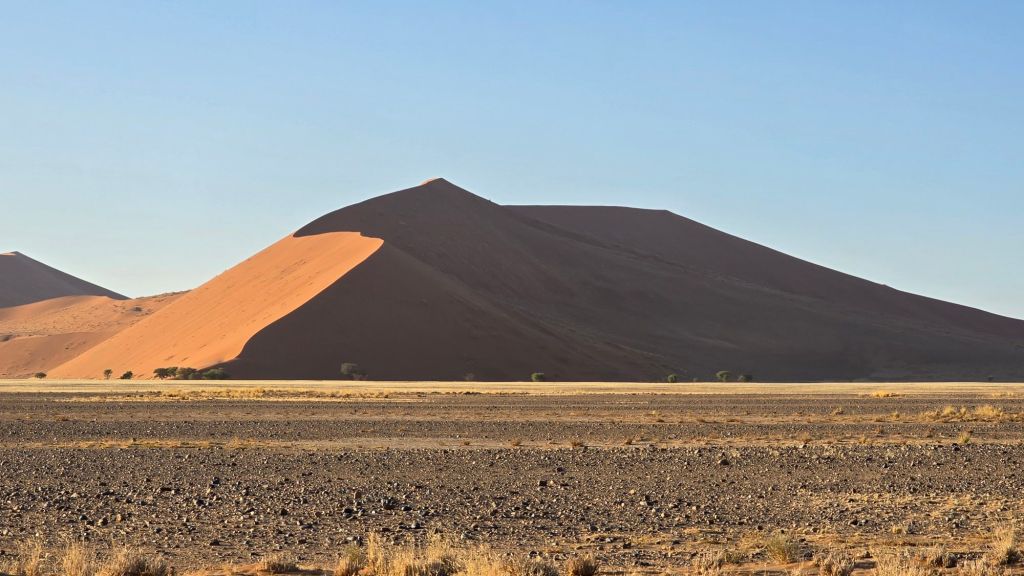
    Big Daddy Dune in Sossusvlei

    The dunes are numbered according to their distance from the Sesriem gate entrance to the park, whilst some have developed nick-names in preference to numbers. There are many dunes – not all of which are open to the public to climb.  Currently, the three climbable dunes are dune 45 (80m), Big Mama (250m), and Big Daddy (325m – the highest of the dunes).  The deep red colour of the dunes is caused by the oxidation of the iron content.
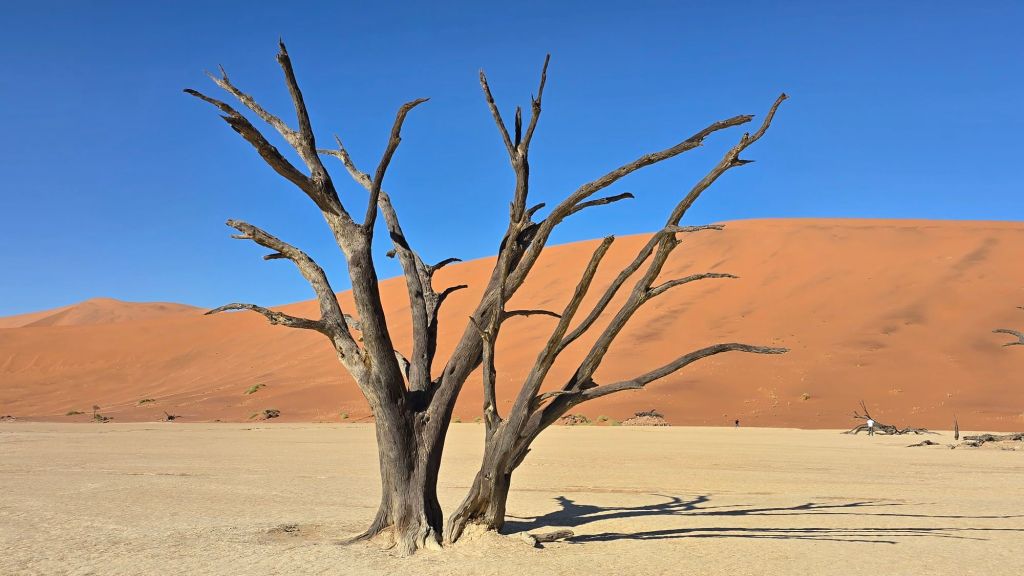
    A camel thorn tree in Deadvlei

    Most people choose to climb Big Daddy, not o ly for the accomplishment of being the highest, but also because it gives direct access to Deadvlei below. 

    Deadvlei is a white clay pan area next to Sossusvlei,  characterised by its dead camel thorn trees, which are starkly contrasted against the white pan floor.  Following a period of climate change, the Tsauchab River was blocked from reaching the area as the sand dunes encroached, killing all the trees in the river bed.  The trees are estimated to be in the region of 1000 years old, but have never decomposed due to a combination of the clay pan fossilising the roots, and the surrounding arid conditions.

    Despite being quite busy, it felt eerily quiet and empty within the deadpan, but remarkably peaceful, with the gentle breeze blowing through the valley serving as a welcome break from the sweltering heat.
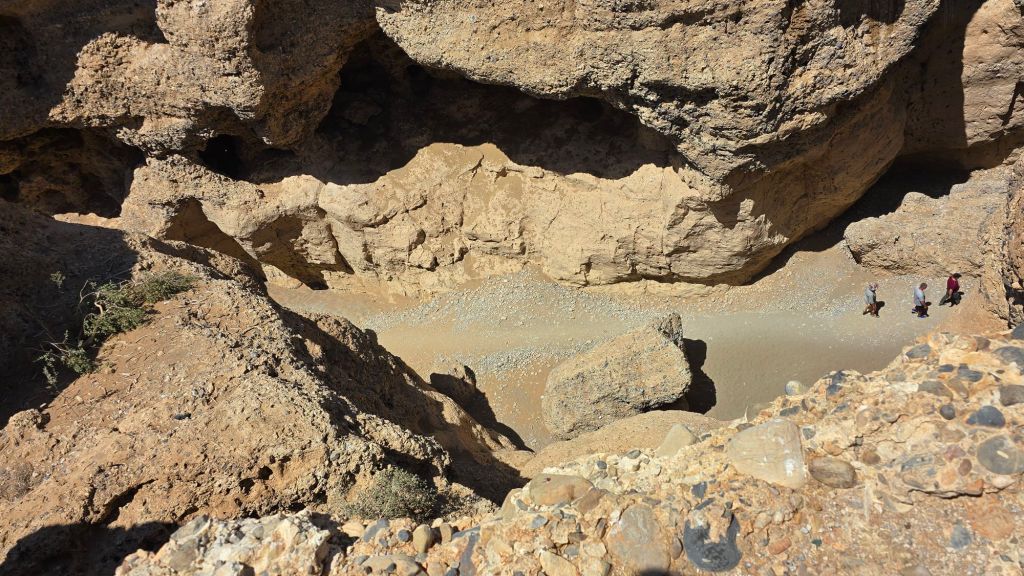
    Sesriem Canyon

    The nearby Sesriem Canyon is a 30m deep gorge that was formed by the Tsauchab River.  Sadly, we were unable to take the hike through the gorge, so instead chose to simply admire the marvel from above. 

    The Lodge
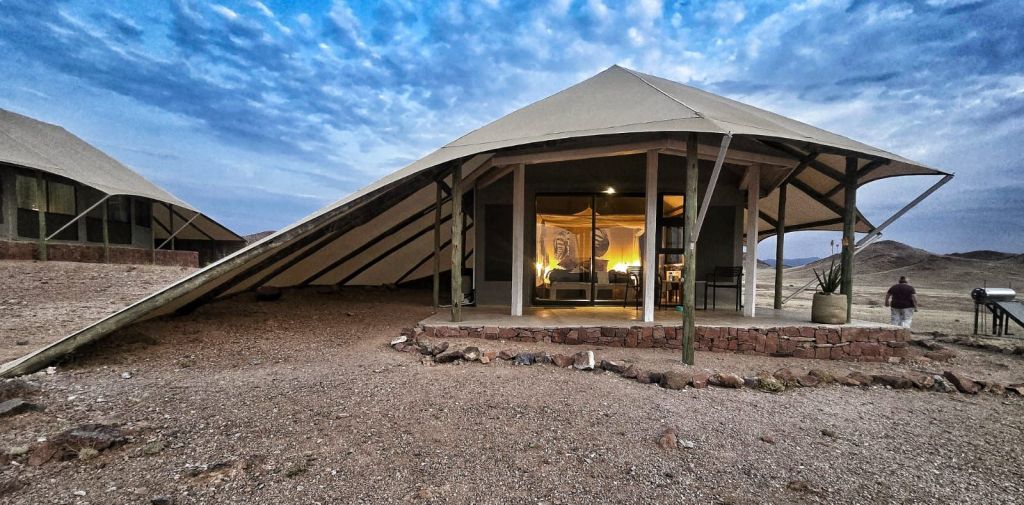
    We stayed at Desert Hills Glamping Camp just outside of Sesriem.  It was our first time under canvas on this trip – but a far cry from our usual camping trips – this is glamping, and then some – with proper beds, air-con, and en-suite shower and toilet facilities.

    The camp is located in an isolated scenic valley on a private farm, providing some dramatic views and magnificent sunsets, and consists of a central main unit with a small pool and 12 tents spaced sufficiently to ensure privacy.

    The area is famed for its night skies with the lack of light pollution providing clear views of the milky way.  Sadly, we were experiencing sand storms in the afternoons and evenings here which made both sky-watching and pool swimming impossible.

    There were 2 other parties whilst we were there but we felt like it was just us – the approach was very personal, with very attentive staff.  We booked our visit to Sossusvlei through the lodge and were fortunate enough to have a private trip with the exceptional Mr T (so named by George W Bush when he visited the region), whose knowledge of the area, its history and geology, were second to none.  He was extremely courteous, taking on board our limitations and allowing us to do things at our own pace.

    Back at the lodge, evening meals were set 3 courses each night, and were beautifully cooked and well-presented.  Breakfast was a selection of cold items from a buffet, and eggs and bacon available to order.

    Overall, a beautiful lodge in a beautiful location.

  • Namibia days 4-6 The Kalahari Desert

    Namibia days 4-6 The Kalahari Desert

    Africa time

    After only a few days here, the concept of “Africa time” has well and truly sunk in.  You may be familiar with the manãna principle in Spain – anything and everything is a tomorrow problem.  Africa time is similar, but you are given a scheduled time, that really doesn’t mean anything.  Our tour of Windhoek was scheduled for 2pm, but they turned up at 9am (after trying to insist we were booked for 2pm the day before, when we were still at the airport!).  Today, we had a transfer booked for 9am to take us to collect our hire car.  By 9.30 it had not arrived, and we had to phone to chase – explanation? Africa Time!

    We eventually got to the car hire office and spent an hour having a full demonstration on the dos and don’ts of driving in Namibia.  Car pick up completed (Toyota Hilux Raider Automatic Diesel for those that are interested), we stopped off at the local mall to get some snacks and water to store in the car.  (The mall itself was a bit of a change from the UK – it was full of shops! Not a vacant unit in sight).

    Car stocked up, we hit the road, finally leaving Windhoek at around 1pm

    Driving from Windhoek to the Kalahari

    The B2 out of Windhoek

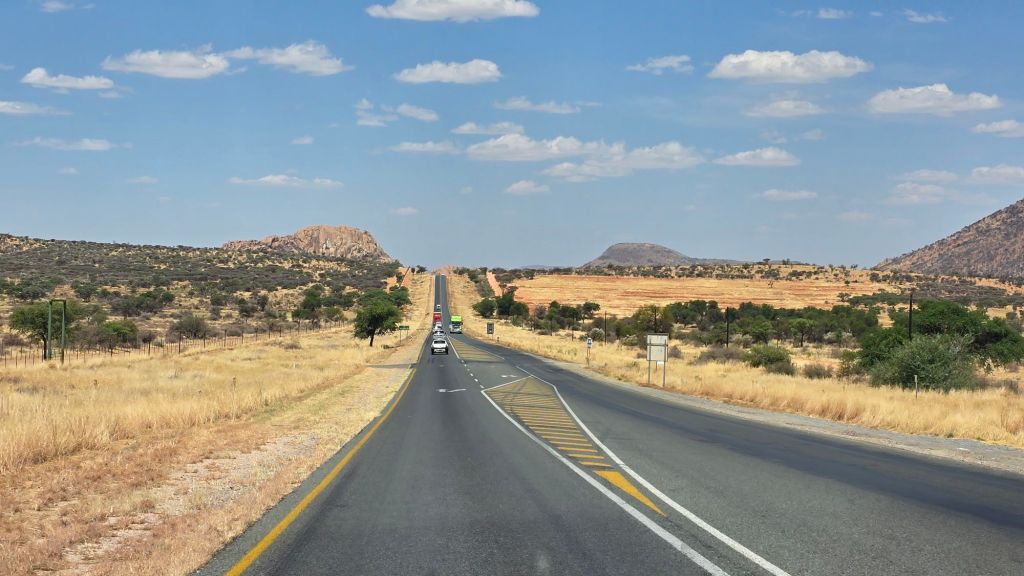
    Namibians drive on the left, which makes life much easier for us Brits to handle.  Speed limits vary according to the road types but generally it’s 75mph on good tarred roads, down to 37mph on the gravel roads.

    Rules of the car hire included no driving in the dark (except between a couple of coastal towns), and headlights are to be kept on whilst driving at any time of day.  Roads are long and there’s often nothing to stop at along the way.

    The 190 mile journey started off on well-tarred roads, but the tar had started to degrade the further out of town we got, and the final 30 miles of road were gravel roads – very bumpy and slow.  But being slow had its blessings, as we spotted a few animals along the way – an African Ground Squirrel, a Springbok, and a couple of Ostriches, as well as a few birds for Phil’s tick list.

    The final few miles were just on sand tracks inside the ranch – even slower and bumpier, and we finally arrived at the ranch at 5pm.

    Evening game drive

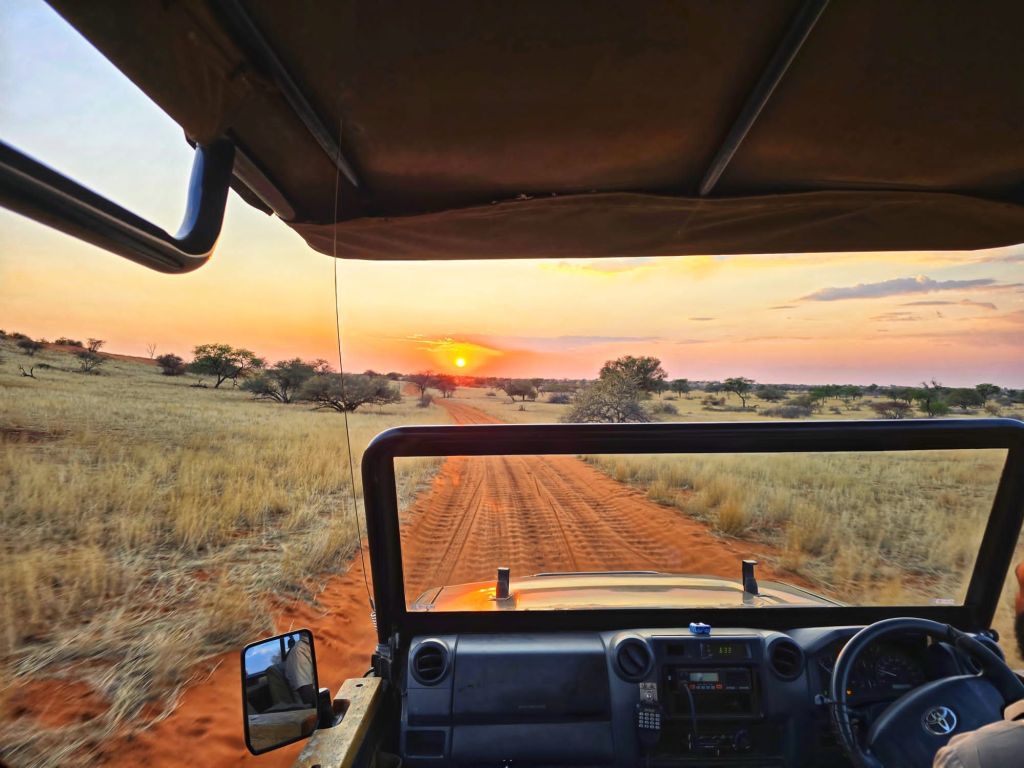
    Setting out on an evening game drive

    Dinner was served from 7pm, and at 8.30pm we set out for our first game drive of the trip – a 1.5 hour evening drive.

    It was slightly disappointing, as our driver was so intent of finding a rhino that had been reported as being seen that he was dismissive of other animals around the 7,000 hectare ranch. Animals we saw included:

    South African Spring Hare, Springbok, Oryx, Cape Fox, Steenbok, Small-Spotted Genet, and Cape Hare.

    Morning game drive

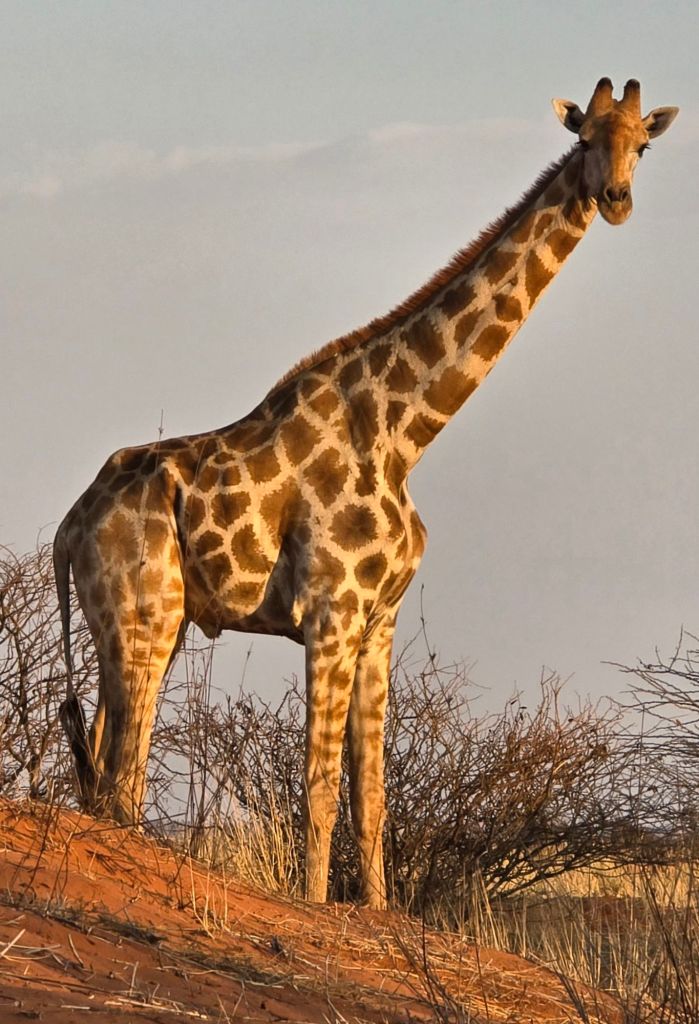
    Southern Giraffe

    Up early the next morning, we had a much more positive experience of a game drive from this ranch with a 2 hour morning drive (6.30 am start).  The guide was friendly and happy to stop for anything we wanted to see.  A much more productive morning with sightings of:

    Bat-eared Fox, Plain Zebras, Southern Giraffes, Black and Blue wildebeest, White Rhinos (including a baby), Springboks, and Oryx. 

    Back at the ranch for breakfast, a rest and a chilled afternoon by the pool before dinner.

    Black Wildebeest

    Bushman Walk

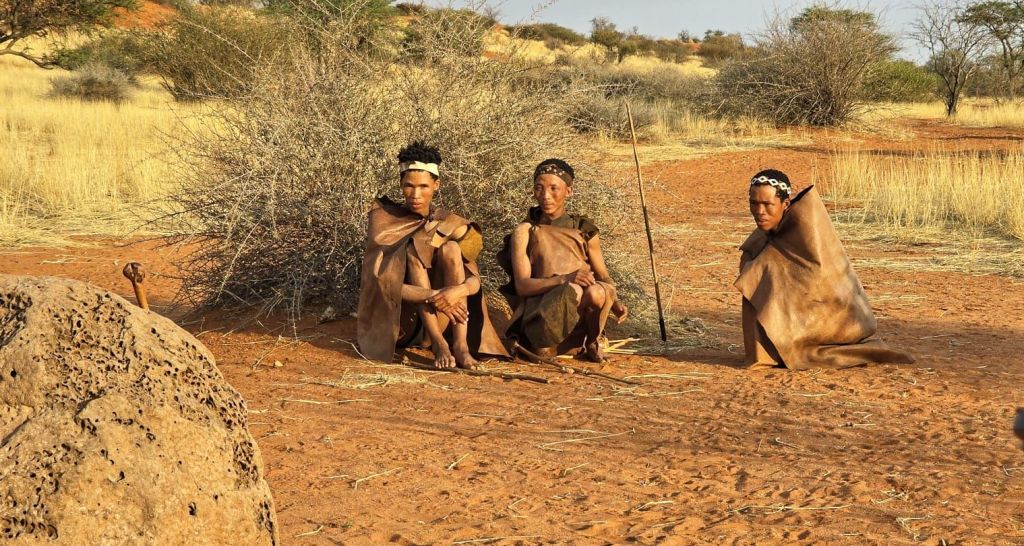
    San bushmen

    Another early morning start took us on an interpretive Bushman’s walk.  A walk into the ranch with local men from the San tribe who demonstrated their hunting and survival skills.

    There are several indigenous tribes in Namibia, each having their own languages.  Whilst there are similarities between the languages, some have additional 5 ‘click’ letters included in their alphabets – using punctuation marks to write them. 

    The San Bushmen spoke a language called Ju/Hoansi and our guide interpreted into English.

    We learnt how they hunt anteaters by monitoring termite mounds, and how every part of the anteater is used – for meat, clothing, weapons, and sunscreen (from the fat).

    We had a demonstration of how they use a small trap to capture ostrich – again every part of the ostrich is used, and how ostrich eggs are used to store water in the bush, so each Bushman has access to water when out hunting in this arid land.

    Finally, we were shown how they make use of the acacia tree to make medicines, and use the twigs to clean their teeth.

    Whilst our walk was clearly staged for the tourist market, there remain indigenous tribes that continue to live in the traditional ways throughout Namibia.

    Back at the ranch for a swift breakfast before heading back out onto the road for the next leg.

    Sociable Weaver Birds

    Sociable Weaver Bird nest

    Throughout the Kalahari, Sociable Weaver Bird nests can be seen in the trees, so I thought it would be worthy of a mention. 

    These tiny birds build nests that house generations of their flocks.  They will continue to live here until the nest is compromised – sometimes by other (lazier) birds squatting and other times by snakes, at which point they will move to another tree and start to rebuild.  They are fascinating to watch but avoid standing underneath, in case an invading snake falls out!

    The Lodge

    I’m not going to mention the name of the lodge in this public space.  Whilst the White Rhino population of Southern Africa has increased from near extinction in recent years, they remain endangered and are still hunted by poachers, so advertising where the rhinos are would not be good practice. 

    The lodge itself had a range of accommodations from campsites to exclusive private dining chalets.  We could not fault our chalet which had uninterrupted views of the Kalahari sand dunes.  The food was amazing, with plenty of choice, and the service was very good.  The only thing that let it down slightly was that it lacked a bit of personal touch – it was a well-oiled machine that catered for a larger (compared to some other lodges) market.

  • Namibia day 3 – Windhoek

    Namibia day 3 – Windhoek

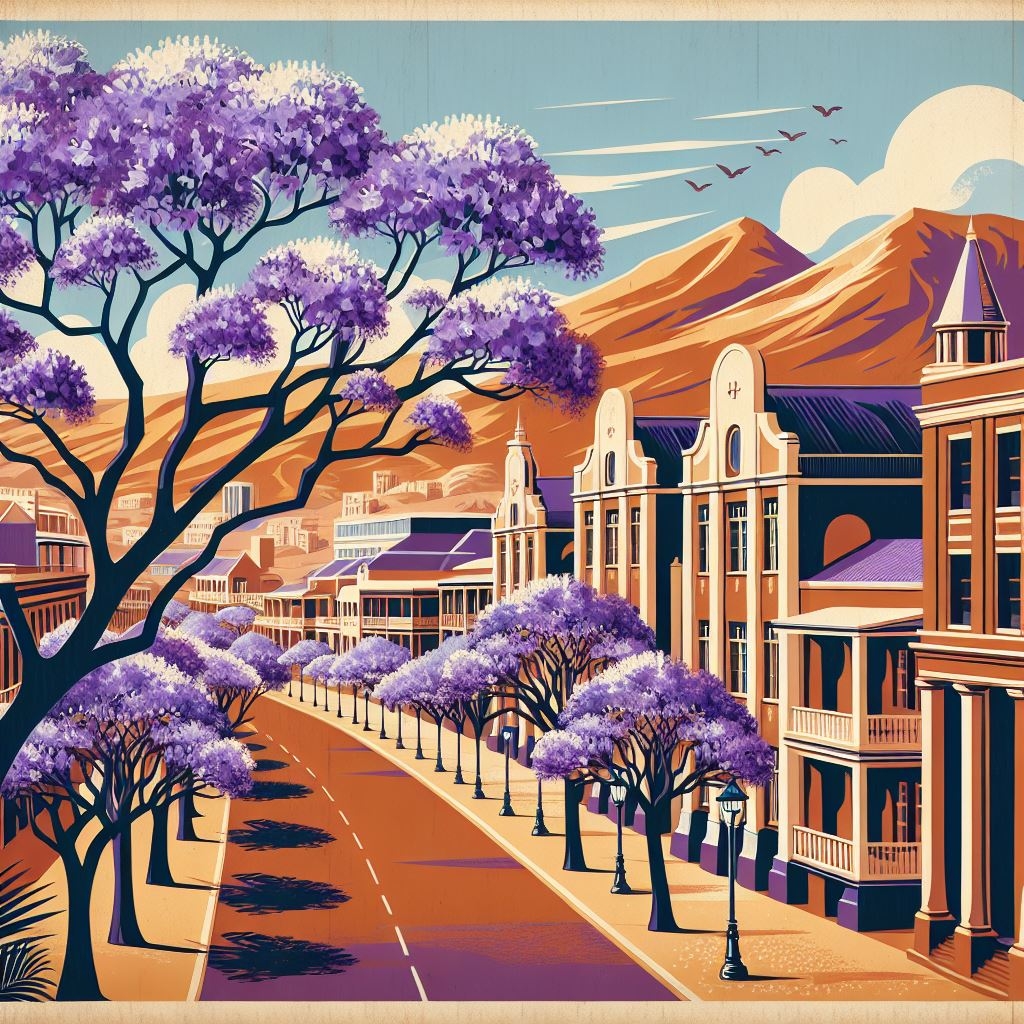
    Visiting Windhoek in October meant we were welcomed by streets lined with Jacaranda trees in bloom.  Picture trees full of bright lilac bluebells – a beautiful sight that made the city look very inviting.

    Windhoek is the capital city of Namibia and is home to 500,000 of the country’s 3 million population.  It is currently spring and daytime temperatures are around 30°C, rising to low 40°Cs in the summer and falling to mid 20°Cs in the winter (and as low as 7°C at night).  It is the tail end of the dry season, with rains due between December and March (the peak is about 9 days in February!).

    With only a day here, we opted to join a half day city tour to see some of the highlights the city has to offer, including: the Christ Church, Ink Palace, Parliament Gardens, and the train station.

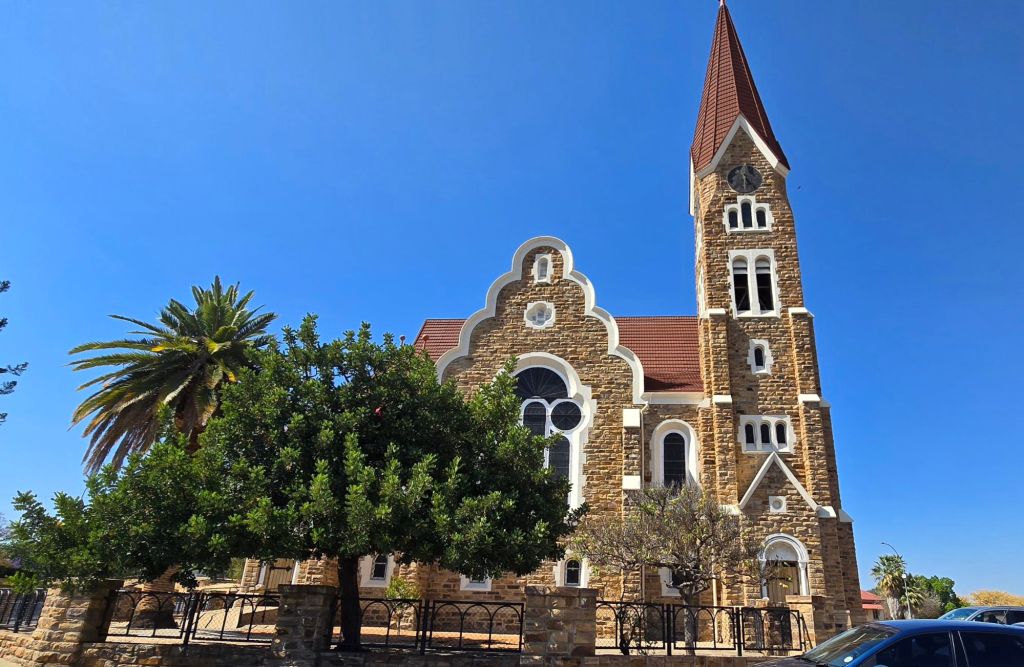
    The Christ Church

    The Christ Church is the city’s main Lutheran church and has a prominent position in the middle of one of the city’s largest and busiest roundabouts.  Unfortunately, it is only open 3 days per week, and not on the day we visited,  so we were unable to admire the reportedly stunning stained-glass windows that had been gifted from Germany in the late 1800’s, only to discover 100 years later that they had been installed back to front!

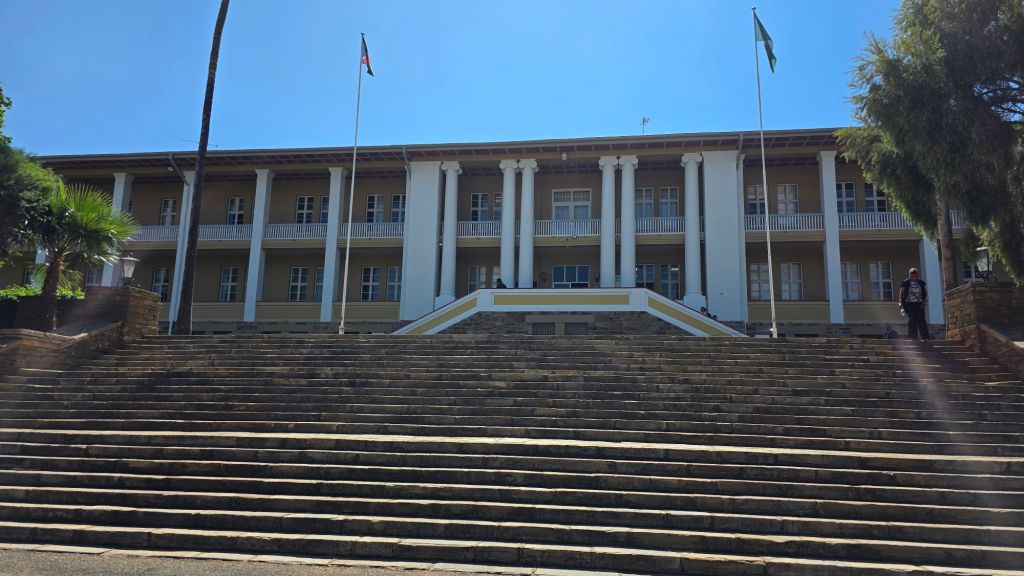
    The Ink Palace

    The Ink Palace is the name given to the Parliamentary building.  Built in 1912, using forced labour from concentration camps under German occupation, it gained its local name due the extensive amount of ink used by workers in the building.

    Parliament Gardens

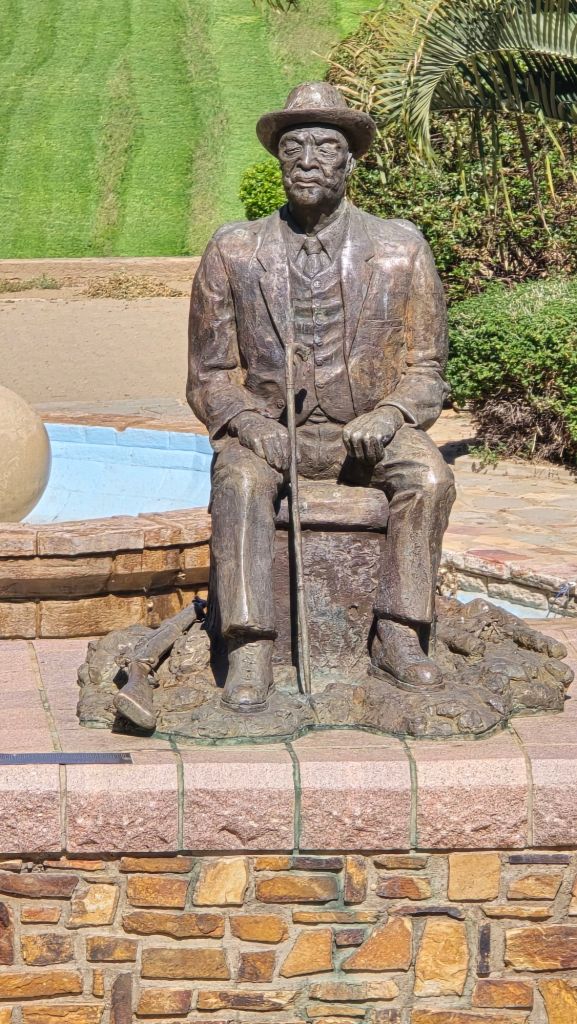
    Hosea Kutako

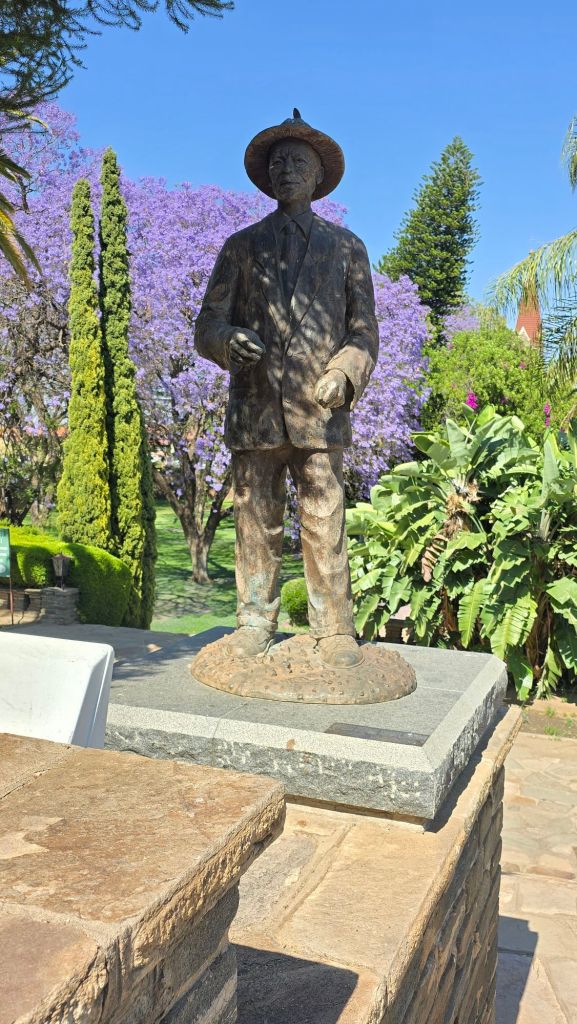
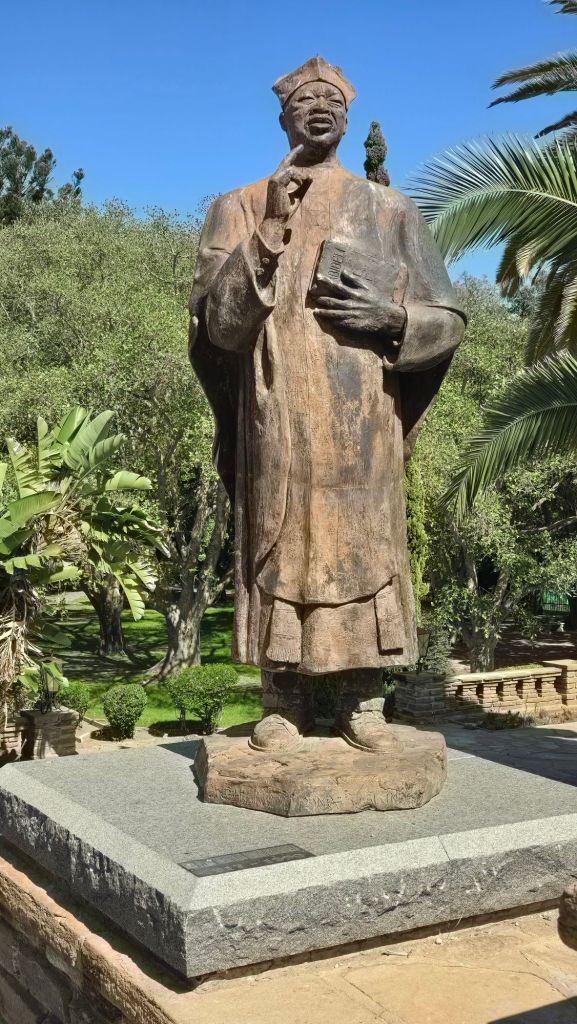
    Parliament Gardens surround the Ink Palace and are open to the public, as a well-maintained public open space.  The park pays homage with monuments  to some notable people from Namibian history and its fight for independence.

    Hendrik Samuel Witbooi

    Hendrik Samuel Witbooi was instrumental in the Namibian fight for independence from South Africa; Hosea Kutako was a founding member of Namibia’s first nationalist party, and Windhoek’s main international airport is also named after him; and Reverend Theophilus Hingashikuka Hamutumbangela who was a leading anti-apartheid activist.

    Reverend Theophilus Hingashikuka

    The Train Station

    The train station is all but a museum these days as it is no longer served by local trains.  The  ‘Desert Express’ service once transported people away from the city to the coastal town of Swakopmund, and other notable towns throughout the country.  But the introduction of interstate buses and improvements to the road network, meant the journey that took 12 hours by train, was halved by buses.  The station now serves only a luxury rail service once every 2-3 months.

    Katatura township

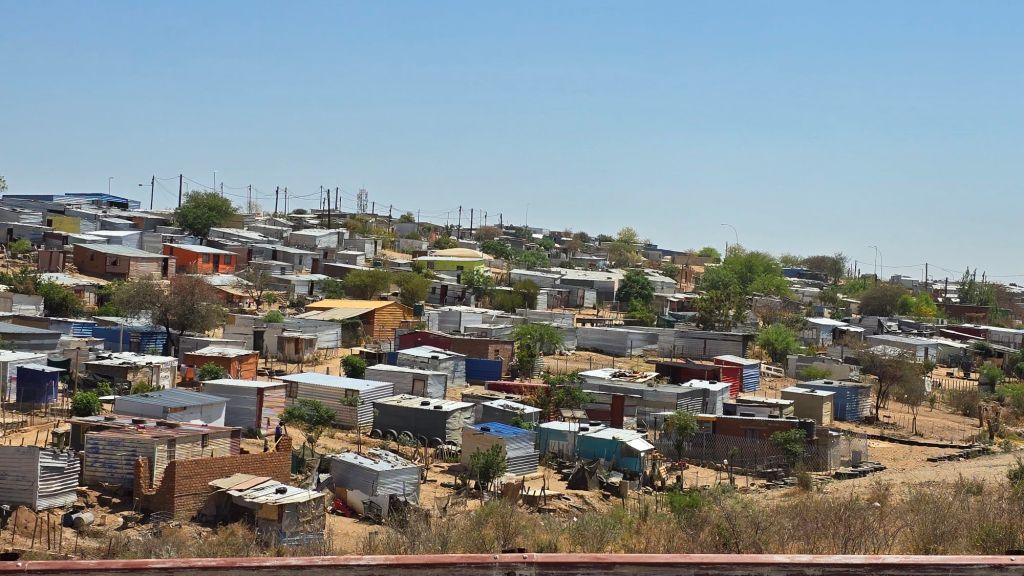
    Katatura township

    After visiting these areas of interest, we were taken to the edge of the town to see the city’s largest township – Katatura, home to 300,000 of Windhoek’s residents.  Created in 1961, as part of the forced removal of the black population into a new location, further from the city centre, under South African apartheid administration, the suburb (Katatura translates to “the place where people don’t want to live”) continues to grow as more people from Namibian towns and villages, and immigrants from neighbouring countries flock to Windhoek seeking work. Housing is simple shacks with water from communal stands every few 100m and communal toilet blocks.  Even when gainfully employed, many refuse to leave their community of family, friends and way of life, choosing instead to just improve what they already have – building brick shacks to replace the corrugated tin shacks.  Apartheid was abolished in Namibia in 1975, despite remaining under South African administration until 1990.  The current population is made up of 11 ethnicities who, despite the glaring differences in wealth, live in harmony, with no racial tensions.  When asked, our tour guide said the only thing he’d really noticed about gaining independence from South Africa was that Namibia gained an extra holiday, and they changed some road names.

    Joe’s Beerhouse

    Our visit to Windhoek almost over, there was just one more place to visit – the (in)famous Joe’s Beerhouse.  No matter who you speak to, the number one recommendation is here, but it’s not for the faint-hearted and vegetarians would be hard-pressed to find something to eat.  Namibia is a meat-eating nation and with game a-plenty, the menu is full of local choices.  Phil opted for a trio of game (zebra, kudu, and springbok), whilst I had springbok medallions.

    The place is full of locals and tourists; families, couples and groups of friends – all are catered for.  The food is top notch and generously proportioned, with a good selection of local and international beers, wines and soft drinks to wash it down with – all at affordable prices.  Nothing has been overinflated to match its popularity (£40 for a 2-course meal for 2 with beers – and we didn’t go for the cheapest options).  The only problem is, we can’t make a second  visit!

  • Namibia Days 1-2, Trains, Planes and automobiles

    Namibia Days 1-2, Trains, Planes and automobiles

    No matter how many times I fly (and I love flying), I still find airports very stressful environments, and Manchester Terminal 3 has now topped the list for being the worst embarking experience I’ve had.

    Our first flight was a domestic flight from Manchester to Heathrow, so check in only opened 2 hours before departure. Queues at check-in, followed by a long wait as our hold baggage was selected for additional security checks, then almost an hour going through security, left us with minutes to get to the gate and onto the plane.

    Then came our first delay. Apparently, the plane had not been cleared by an engineer for take-off, so we then waited an hour for an engineer to turn up. With only a 2 hour connection window (now reduced to 1 hour) at Heathrow, we ran from one end of Terminal 5 to the other, catching a transit train along the way, just in time to board our next flight. Following the recent cyber attack at Heathrow, the crew were having to do manual checks so boarding was slow and late. Once boarded, we found ourselves being delayed another hour (no reason given this time).

    The leg from Heathrow to Johannesburg was aboard the iconic Airbus A380. We’ve both wanted to fly on this plane for some time and our last trip that was due to be onboard an A380 was cancelled due to Covid, back in 2020. As they are gradually being phased out to make way for more fuel efficient transport, we thought our chance would never come.

    The A380 is a double-decker beast of a plane, and we booked seats in the upper deck, where twin seats make the journey more comfortable when travelling in a pair. Being on the upper deck also meant being further from the jets, so it was quieter onboard than usual. The flight itself was uneventful (although we did have a particularly grumpy member of cabin crew, who didn’t smile at all, and for whom everything was just a bit too much of an effort!) and the pilot managed to pull back some lost time, arriving in Johannesburg just 20 minutes later than scheduled. However, more delays occurred as the ground crew were unable to attach the sky bridges.

    The problem was eventually resolved and we made the long walk between Johannesburg airport’s 2 terminals to check in for our final flight of this part of the journey – an Airlink 2 hour flight to Windhoek.

    The plane was boarded promptly, left on time and the cabin crew were outstanding.  What really came as a pleasant surprise was the complimentary drinks and a pleasant meal.  Anyone who has flown short haul in recent years from the UK will appreciate that the demand for cheap flights has led to literally nothing apart from a seat being included in the price, so our expectation of a small snack and bottle of water were certainly exceeded.

    Namibia introduced visas for UK passport holders earlier this year, and we have been reading some horror stories of it taking 2-3 hours to pass immigration.  We’d prepared ourselves for a tiring queue, and once again were pleasantly and gratefully surprised when it took us only half an hour.  Border staff were friendly and efficient, so no complaints here.

    We were met by Geoffrey, who waited whilst we got cash and helped us sort out Sim cards for our phones, before transferring us to our first lodgings – the Olive Grove Guesthouse, in Windhoek.

    The total journey involved 2 taxis, 2 trains, 3 planes, and various airport transits, and took 26 hours door to door.  8,300 steps and 5,820 miles.

    We settled in to our room, but no rest as we had a meet and greet session booked with our trip co-ordinator, Nikki, who spent an hour going through our itinerary in detail and offering some sound local advice.

    Quick showers and then out for a fabulous meal at Fresh ‘n’ Wild – Phil finally had the T-bone steak he’d promised himself as a retirement treat. A nice bottle of Shiraz washed the meal down well, and then we finally hit the pillows for an early night and some much needed sleep.

  • Route is planned…..well almost

    Route is planned…..well almost

    With just 2 weeks to go to our Namibian road trip, we have been busy planning routes and deciding on where we have time to make detours along the way.

    We have received our final itinerary from Hayes and Jarvis, who have been superb in helping us turn our plans into reality. The scheduled road trip will see us travelling in the region of 2,500 miles over 3 weeks, covering a range of terrains – some only accessible by 4×4 vehicles.

    We’ve spent several weekends with maps and guide books spread out over our dining table, finding suitable side trips and rest stops to break the journeys.  No doubt, plans will change as we go along and take recommendations from other travellers, but for now, at least, we have our plan.

  • Planning an Epic Namibia Trip: A Retirement Adventure

    Planning an Epic Namibia Trip: A Retirement Adventure

    We have been planning this trip for over a year.  As the trip is Phil’s retirement treat, he had the whole world to choose from, and I am so pleased that he chose a country in Southern Africa.

    Having spent several months travelling through South Africa, Zimbabwe, Zambia, Tanzania, Zanzibar and Kenya whilst backpacking many years ago, it has remained my favourite region of the world.  I didn’t get the chance to see Namibia back then so when Phil chose it, the traveller itch in me was awoken and I couldn’t wait to get planning again.

    This trip has been planned with the help of a UK Tour Operator, and has been in the making for over a year. Long-lists have turned into short-lists, non-negotiable elements identified, and a few extras added along the way. Many of Namibia’s lodges are booked well in advance, and as we are travelling in peak season, it was essential to get our itinerary finalised and have reservations in place. After several revisions, we finally agreed an itinerary and everything has been in place for several months – from the flights and accommodation to pre-booked day trips and safaris.

    With just 4 weeks to go, we are now into our final planning stages – sorting out visas and planning the details of the routes and side trips along the way – it’s all starting to get very real and exciting!