Category: Uncategorised

  • Namibia Days 11 – 14 Damaraland

    Namibia Days 11 – 14 Damaraland

    Today’s 330km drive took us to Damaraland. We broke the 5 hour drive with a stop en route at the Coffee and Cactus tea rooms in Uis, where we had been advised the apple pie was better than McGregor’s Bakery.  Happy to test the challenge, the half-way stop was a welcome break, but sadly they had no apple pie so unable to report back on this occassion, but we had a piece of cake and a milkshake which were both delicious.
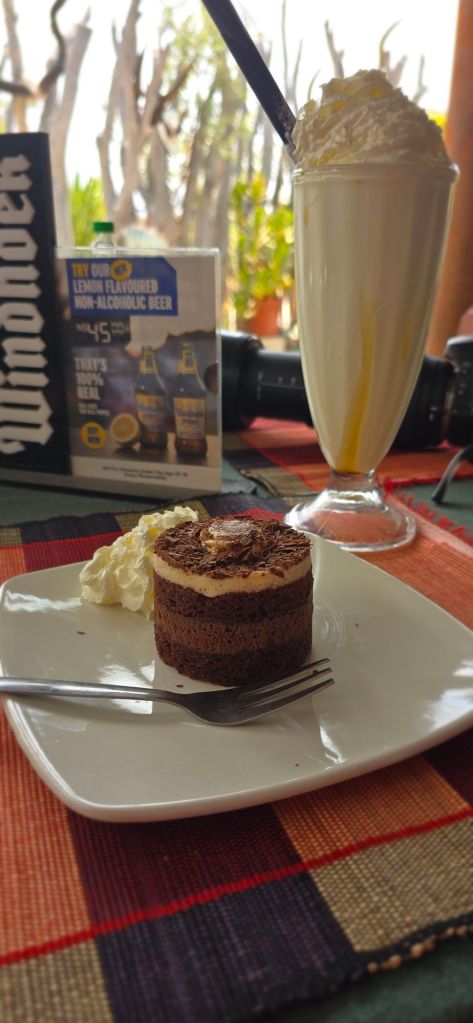
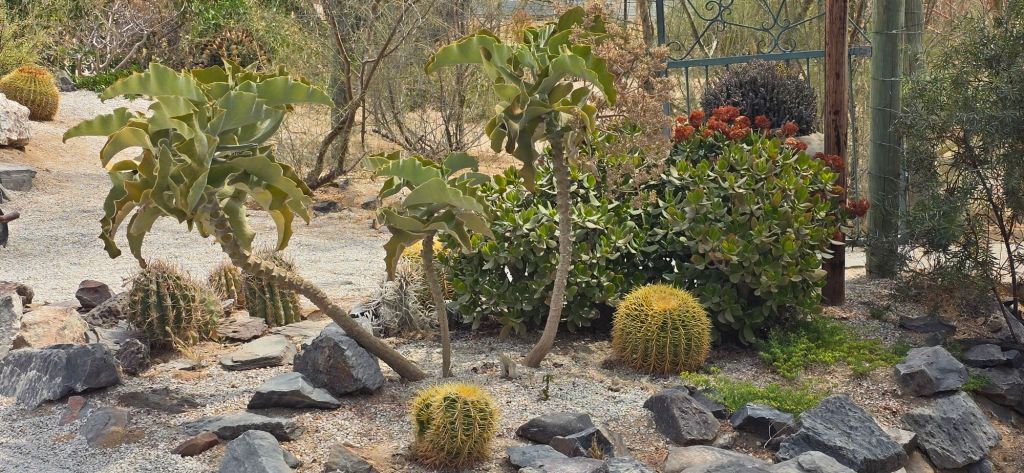
    Not apple pie!!
    Coffee and Cactus
    tea room gardens

    Desert-adapted Elephants

    Damaraland is famed for its herds of desert-adapted elephants, and since elephants are my favourite African animal, a trip to this region was a ‘must-do’ part of our itinerary.  These elephants have adapted to survive the harsh dry conditions of the desert regions.  They have longer legs, larger feet, and a smaller body mass than their cousins, which allows them to last several days without water.  There are only around 1,000 of them in existence so to spend a few hours following a couple of families, as they wandered along the dried Huab River valley was a highlight of our trip and an absolute privilege.
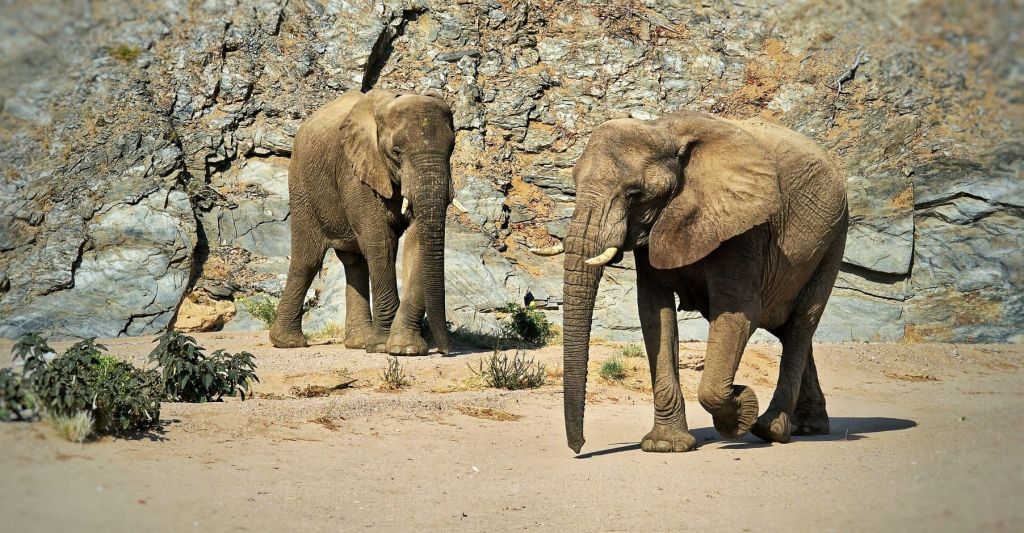
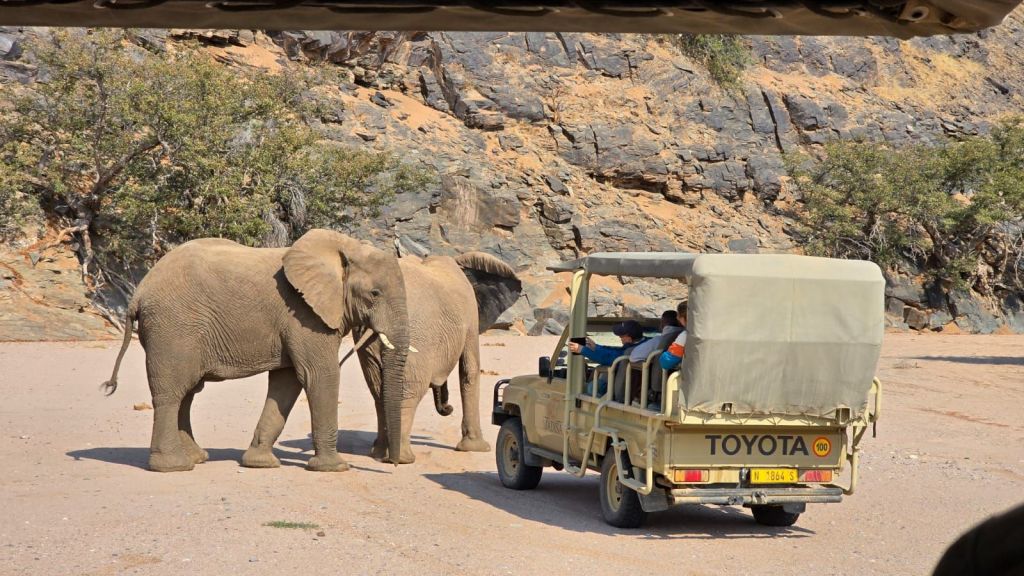
    Desert-adapted elephants

    Organ Pipes

    The area is also known for its various rock formations, so we took a drive out to a couple of sites close to our lodge. 

    We drove by the Burnt Mountain – a 12km long volcanic ridge with an 80million year old solid lava flow at its base.  The changes in colour as the sun caught the lava were pretty spectacular and no pictures could do it justice.

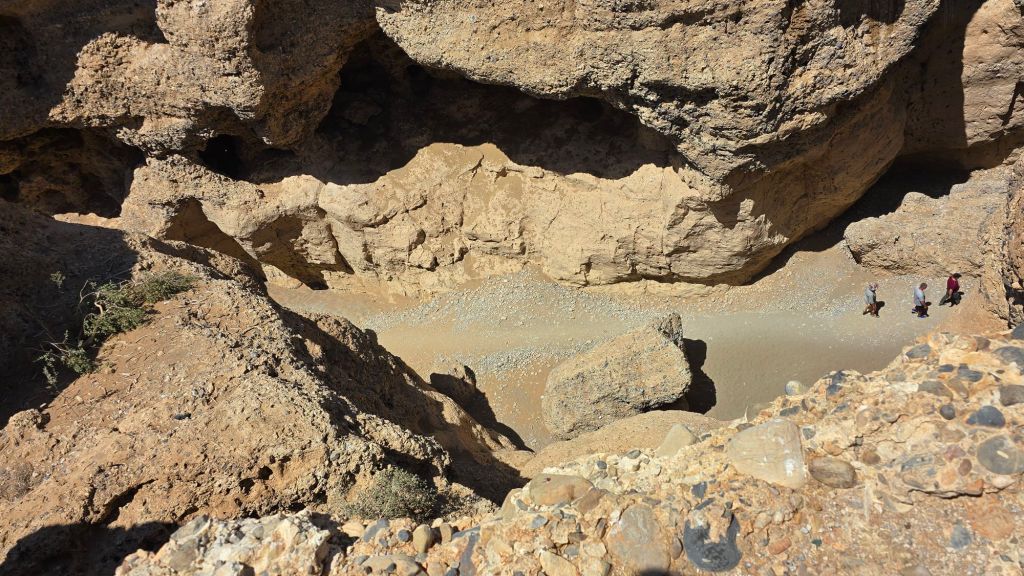
    Next visit was the ‘Organ Pipes’ – a small gorge with 100m stretch of basalt rock formations resembling organ pipes (if you squint a bit!).  A bit pricey to visit with no guide, but it filled some time, and we spotted a dassie rat along the way.
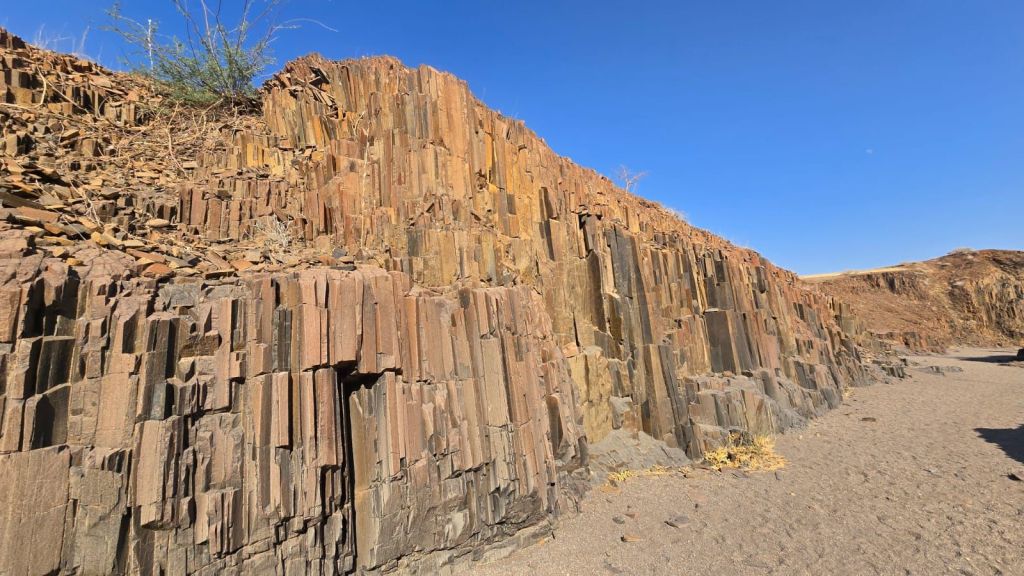
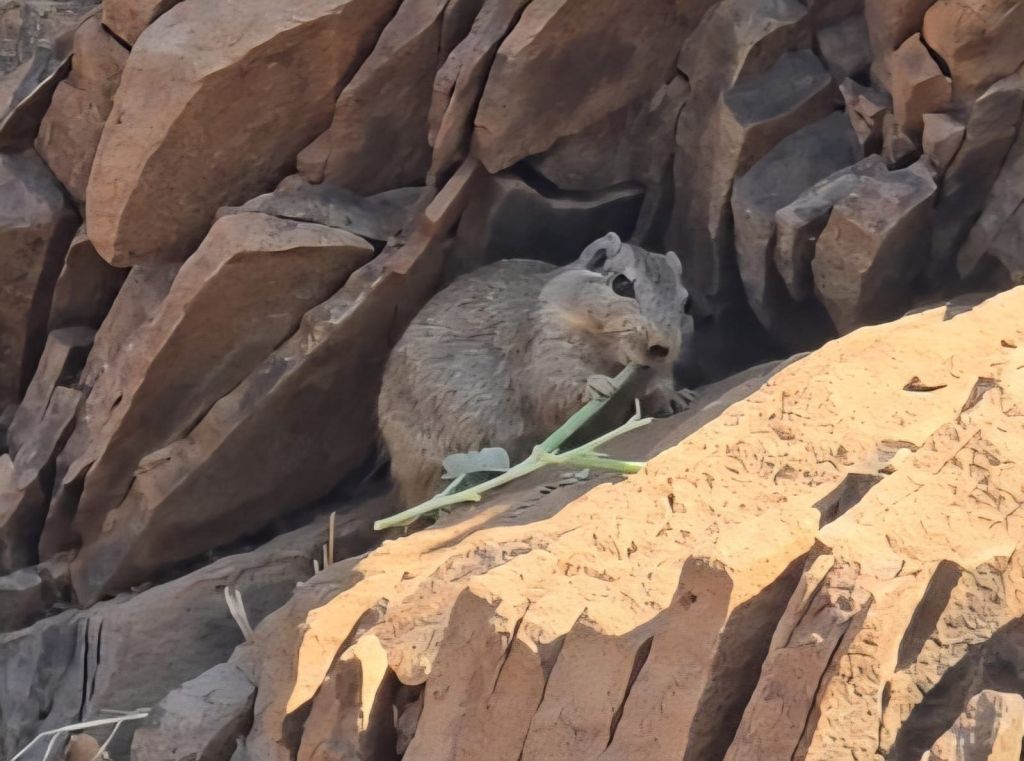
    Squint to see the organ pipes
    Dassie rat enjoying the shade

    Petrified Forest

    Another area of interest in Damaraland was the Petrified Forest – an area with 50ish tree trunks thought to be 260 million years old, deposited by an ice age flood.  The trunks are not standing, and were only discovered by local farmers in the 1940’s as a result of the shifting sands.  The area has been declared a national monument and whilst geological studies have taken place no formal excavation of the site has been allowed, so the exposed elements are all natural.
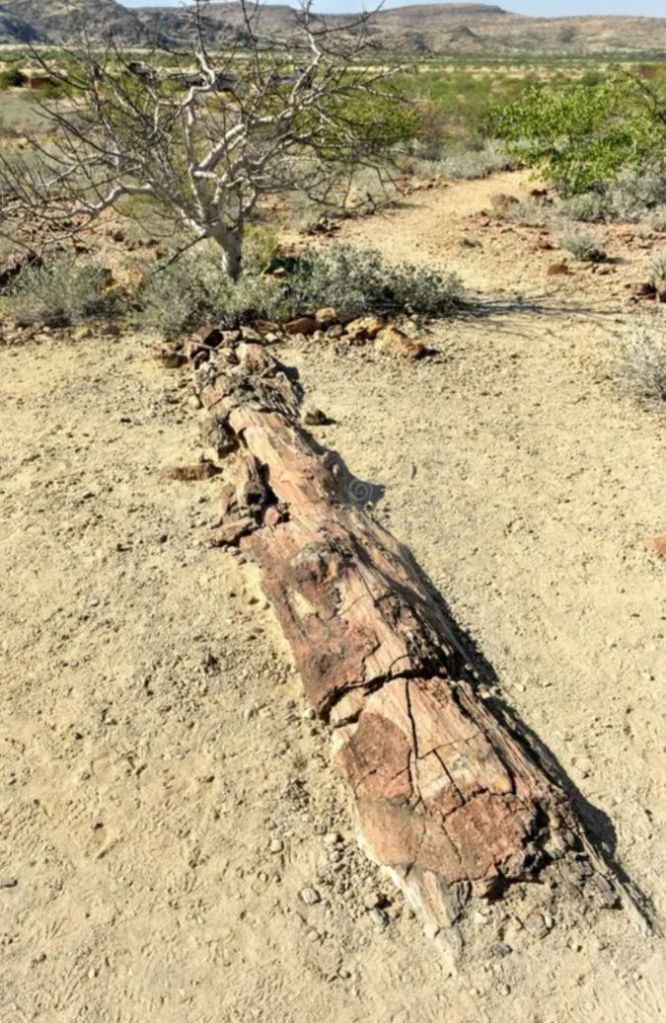
    Petrified forest tree trunk

    Welwitschia

    Whilst visiting the Petrified foredt, we were introduced the National plant of Namibia.

    At first glance, this rather ugly plant is a bit uninspiring, but its relevance as a national emblem tells another story.  The plant consists of just two leaves, and can live for thousands of years, making it one of the longest living plants on the earth, with the leaves splitting, protecting the plant from wind erosion, as they continue to grow in the extreme conditions of the Namib desert.  So its story of resilience and endurance through adversity mirrors the story of Namibia and its people.
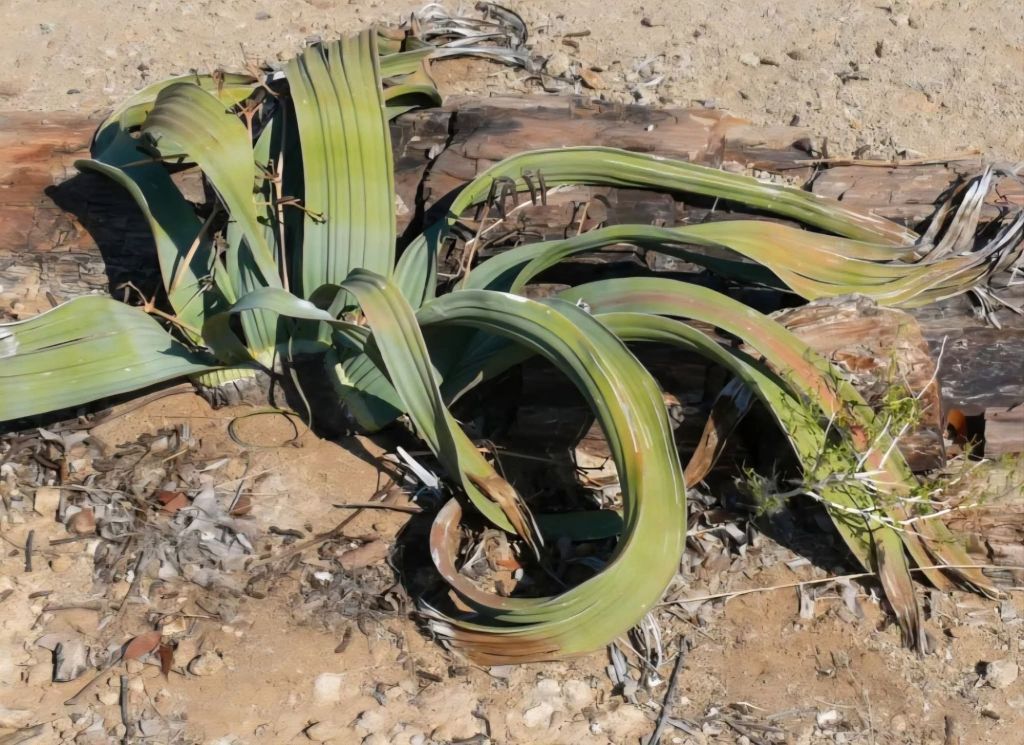
    Welwitschia – the national plant of Namibia

    Twyfelfontain Adventure Camp

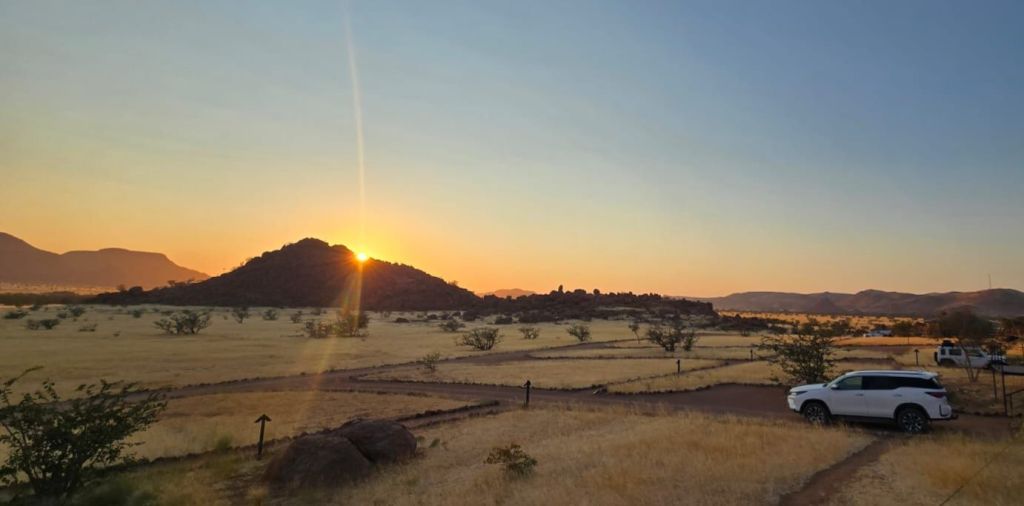
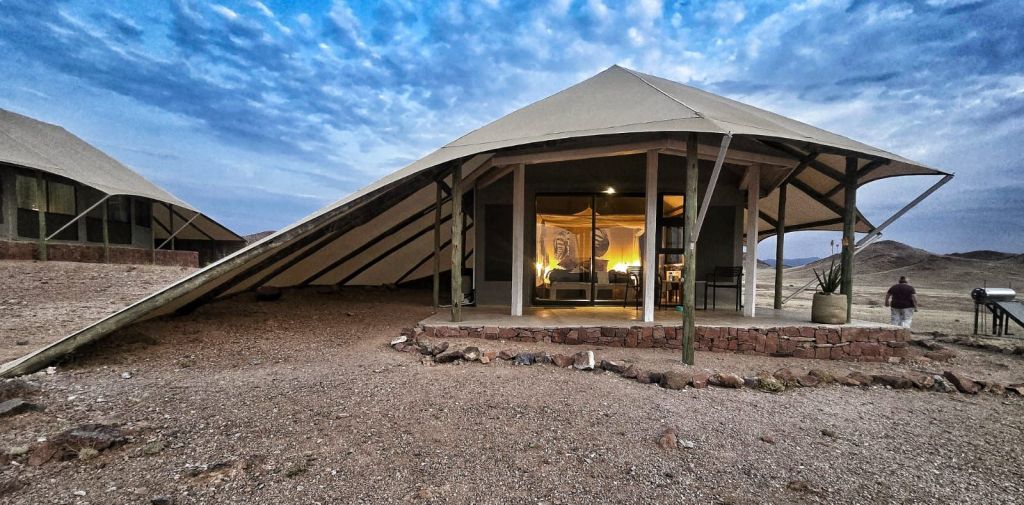
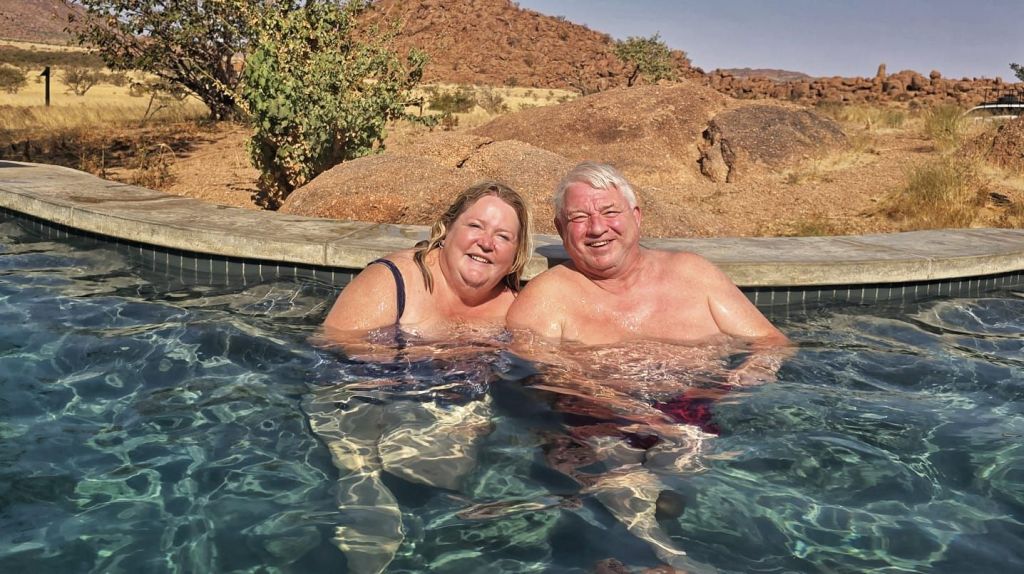
    We stayed 3 nights in a premium tent at Twfelfontein Adventure Camp, in the middle of the arid Damaraland, and the accommodation was fantastic,  a lovely refreshing pool and good choices of food, including daily barbecued options.

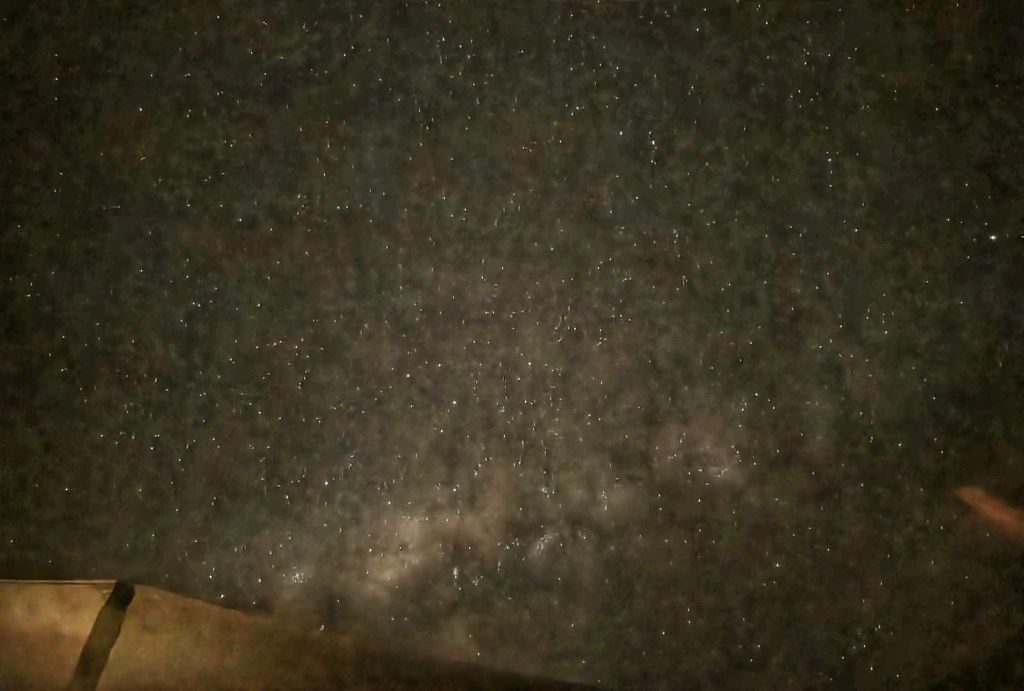
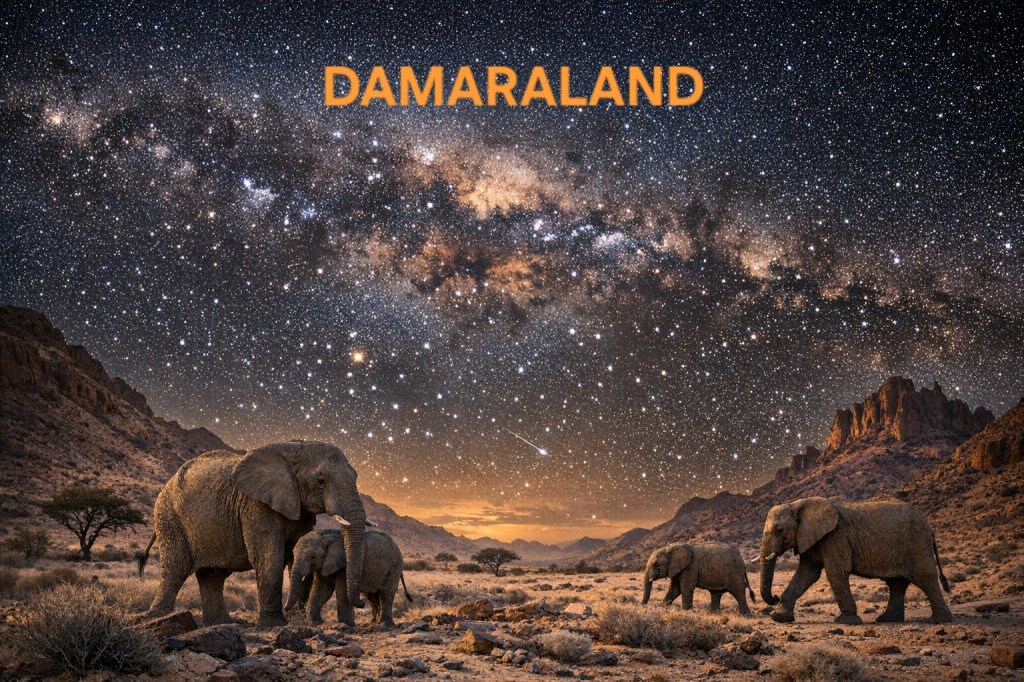
    What made this place ectra special were the dark night skies – we spent several hours watching shooting stars and attempting to photograph the milky way.
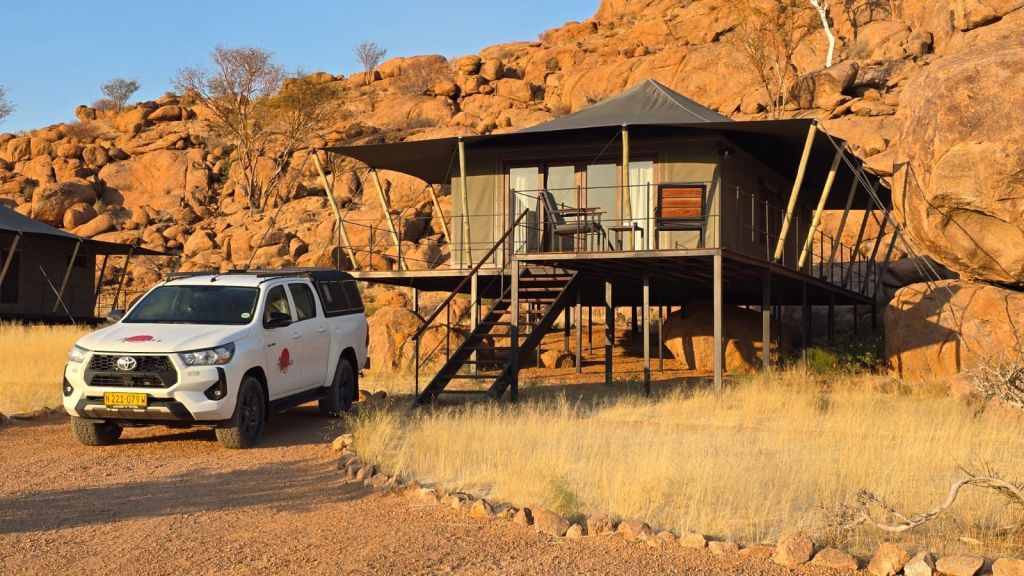
    Our lodge
    The refreshing pool
    The milky way
    Sunrise from the lodge
  • Namibia Days 6 – 7 Sossusvlei/ Deadvlei

    Namibia Days 6 – 7 Sossusvlei/ Deadvlei

    Drive to Sossusvlei

    Following our early morning bushman’s walk in the Kalahari Desert, we had a swift breakfast, before heading off on our next leg.

    Another long drive (195 miles) took us to our next lodge just outside Sossusvlei.  The drive was mostly on gravelled roads, so was very slow.  Having been pre-warned that there are few points of interest along the way, we had a packed lunch from the previous lodge to take with us – a sandwich, some fruit, a protein bar and a couple of drinks each made sure we didn’t go hungry.

    There are few (if any) towns, petrol stations or shops along these roads,  but there are plenty of rest points – usually a table and benches under a canopy or tree for shade where there are usually bins but no toilet facilities.

    We found a suitable rest point along the way and stopped for an hour, eating lunch and watching birds, breaking up the journey before arriving at our next lodge at about 5pm (having left at 10am).

    A gravel road grader

    The gravel roads are particularly bad at the moment, as the country had a lot of rain this year.  These roads are maintained by “graders” – driving diggers up and down the roads to re-spread the gravel to make them more even.  We have spotted a few graders along our way, but there is a huge road network to put right, so it becomes a bit like painting the Forth Rail Bridge (for non-UK readers – it is basically a never-ending task).

    Sossusvlei, Deadvlei and Sesriem Canyon

    An early morning start took us to the Namib-Naukluft National Park – home of salt clay pans surrounded by huge orange/ red sand dunes. The name Sossusvlei means “dead-end marsh” and is formed from 2 words (Sossus is the Nama word for no return, and Vlei is the Afrikaans word for marsh).

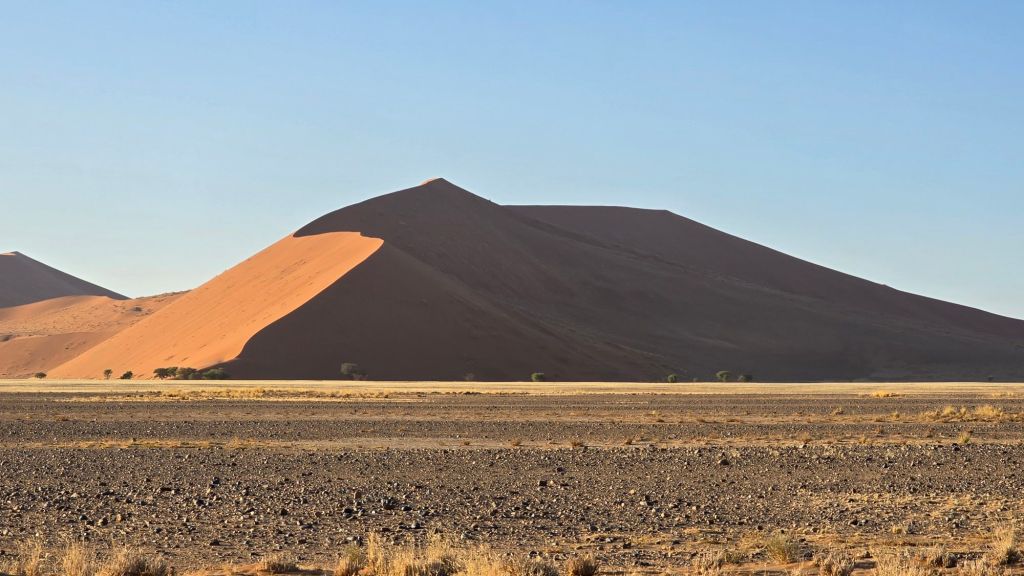
    Big Daddy Dune in Sossusvlei

    The dunes are numbered according to their distance from the Sesriem gate entrance to the park, whilst some have developed nick-names in preference to numbers. There are many dunes – not all of which are open to the public to climb.  Currently, the three climbable dunes are dune 45 (80m), Big Mama (250m), and Big Daddy (325m – the highest of the dunes).  The deep red colour of the dunes is caused by the oxidation of the iron content.

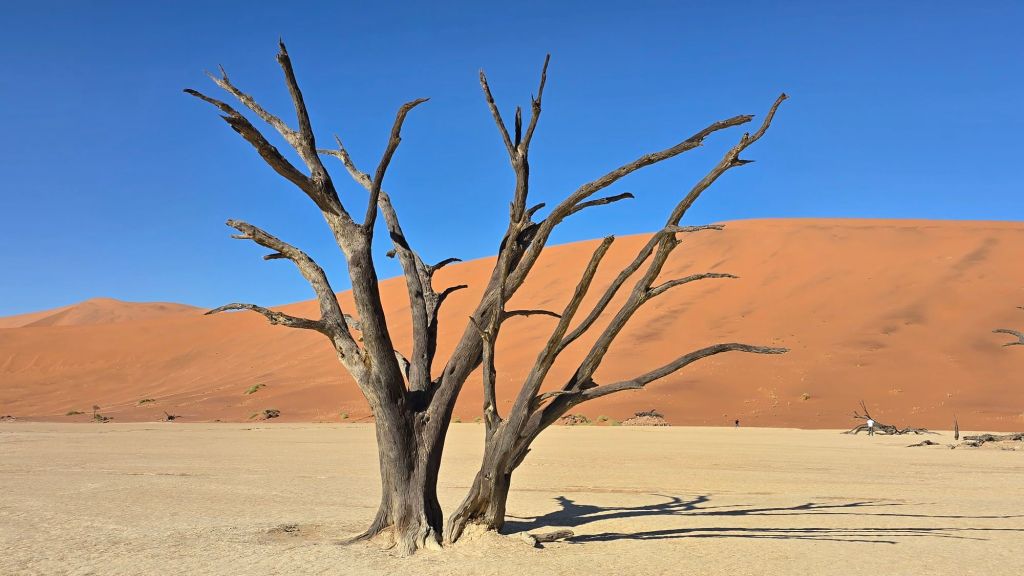
    A camel thorn tree in Deadvlei

    Most people choose to climb Big Daddy, not o ly for the accomplishment of being the highest, but also because it gives direct access to Deadvlei below. 

    Deadvlei is a white clay pan area next to Sossusvlei,  characterised by its dead camel thorn trees, which are starkly contrasted against the white pan floor.  Following a period of climate change, the Tsauchab River was blocked from reaching the area as the sand dunes encroached, killing all the trees in the river bed.  The trees are estimated to be in the region of 1000 years old, but have never decomposed due to a combination of the clay pan fossilising the roots, and the surrounding arid conditions.

    Despite being quite busy, it felt eerily quiet and empty within the deadpan, but remarkably peaceful, with the gentle breeze blowing through the valley serving as a welcome break from the sweltering heat.

    Sesriem Canyon

    The nearby Sesriem Canyon is a 30m deep gorge that was formed by the Tsauchab River.  Sadly, we were unable to take the hike through the gorge, so instead chose to simply admire the marvel from above. 

    The Lodge

    We stayed at Desert Hills Glamping Camp just outside of Sesriem.  It was our first time under canvas on this trip – but a far cry from our usual camping trips – this is glamping, and then some – with proper beds, air-con, and en-suite shower and toilet facilities.

    The camp is located in an isolated scenic valley on a private farm, providing some dramatic views and magnificent sunsets, and consists of a central main unit with a small pool and 12 tents spaced sufficiently to ensure privacy.

    The area is famed for its night skies with the lack of light pollution providing clear views of the milky way.  Sadly, we were experiencing sand storms in the afternoons and evenings here which made both sky-watching and pool swimming impossible.

    There were 2 other parties whilst we were there but we felt like it was just us – the approach was very personal, with very attentive staff.  We booked our visit to Sossusvlei through the lodge and were fortunate enough to have a private trip with the exceptional Mr T (so named by George W Bush when he visited the region), whose knowledge of the area, its history and geology, were second to none.  He was extremely courteous, taking on board our limitations and allowing us to do things at our own pace.

    Back at the lodge, evening meals were set 3 courses each night, and were beautifully cooked and well-presented.  Breakfast was a selection of cold items from a buffet, and eggs and bacon available to order.

    Overall, a beautiful lodge in a beautiful location.