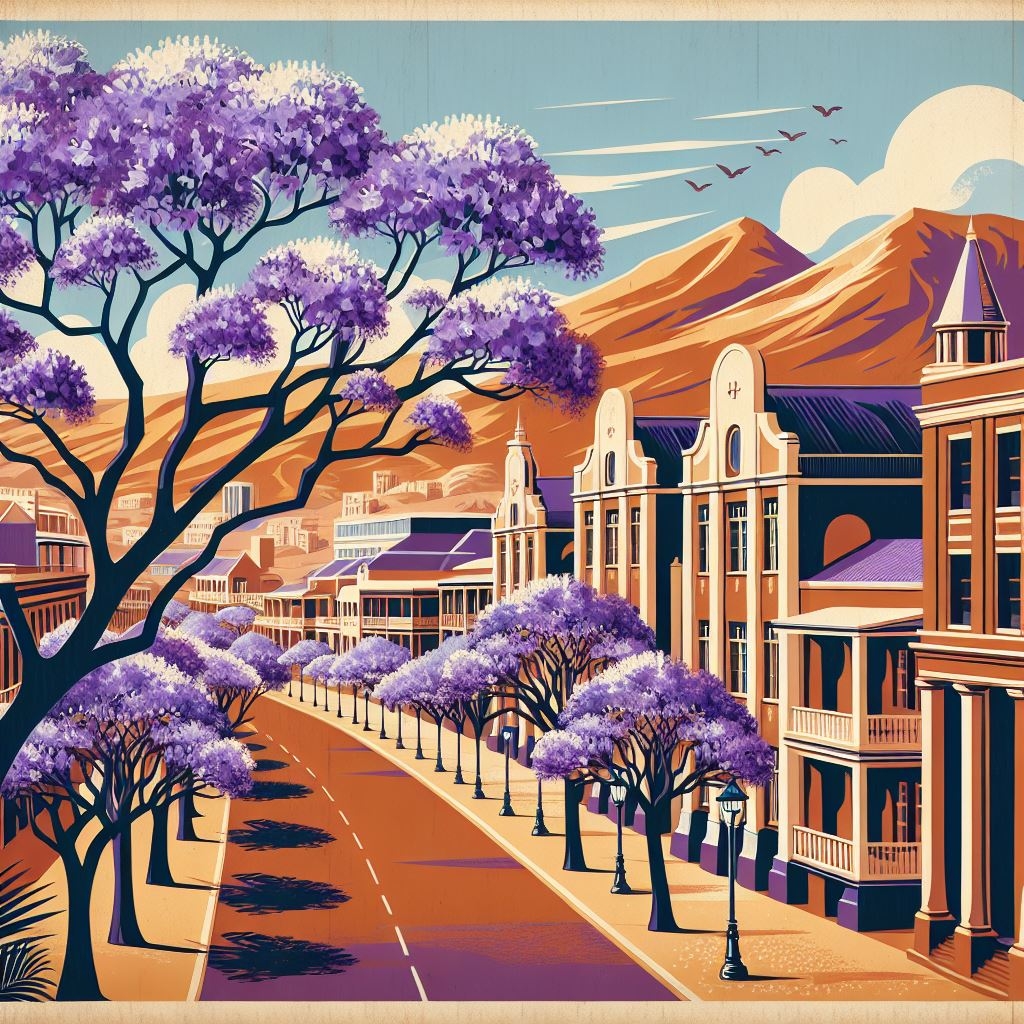
Visiting Windhoek in October meant we were welcomed by streets lined with Jacaranda trees in bloom. Picture trees full of bright lilac bluebells – a beautiful sight that made the city look very inviting.
Windhoek is the capital city of Namibia and is home to 500,000 of the country’s 3 million population. It is currently spring and daytime temperatures are around 30°C, rising to low 40°Cs in the summer and falling to mid 20°Cs in the winter (and as low as 7°C at night). It is the tail end of the dry season, with rains due between December and March (the peak is about 9 days in February!).
With only a day here, we opted to join a half day city tour to see some of the highlights the city has to offer, including: the Christ Church, Ink Palace, Parliament Gardens, and the train station.
The Christ Church
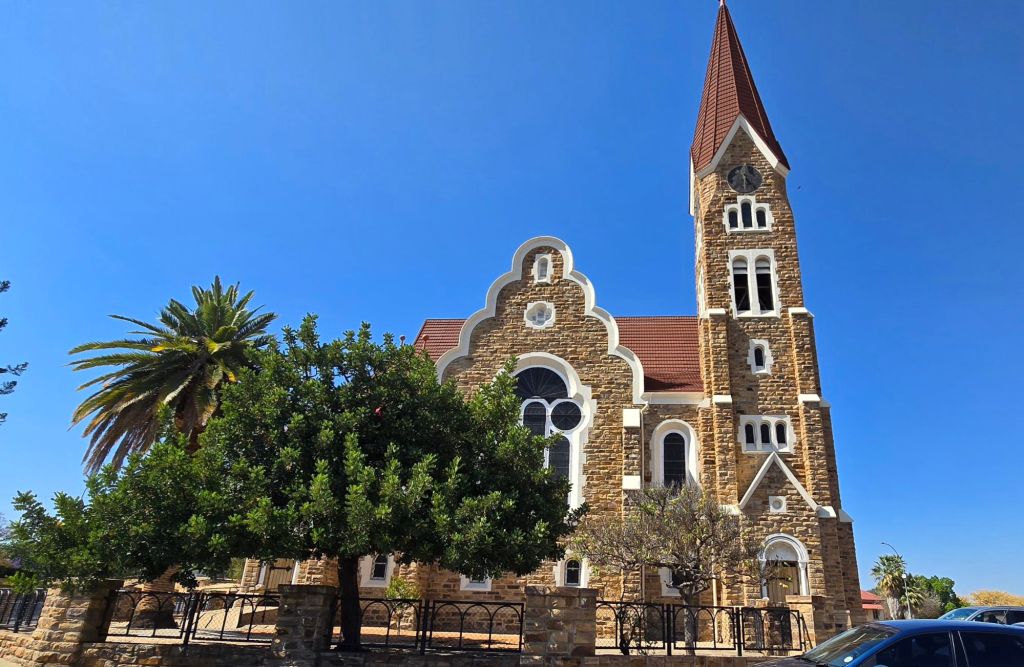
The Christ Church is the city’s main Lutheran church and has a prominent position in the middle of one of the city’s largest and busiest roundabouts. Unfortunately, it is only open 3 days per week, and not on the day we visited, so we were unable to admire the reportedly stunning stained-glass windows that had been gifted from Germany in the late 1800’s, only to discover 100 years later that they had been installed back to front!
The Ink Palace
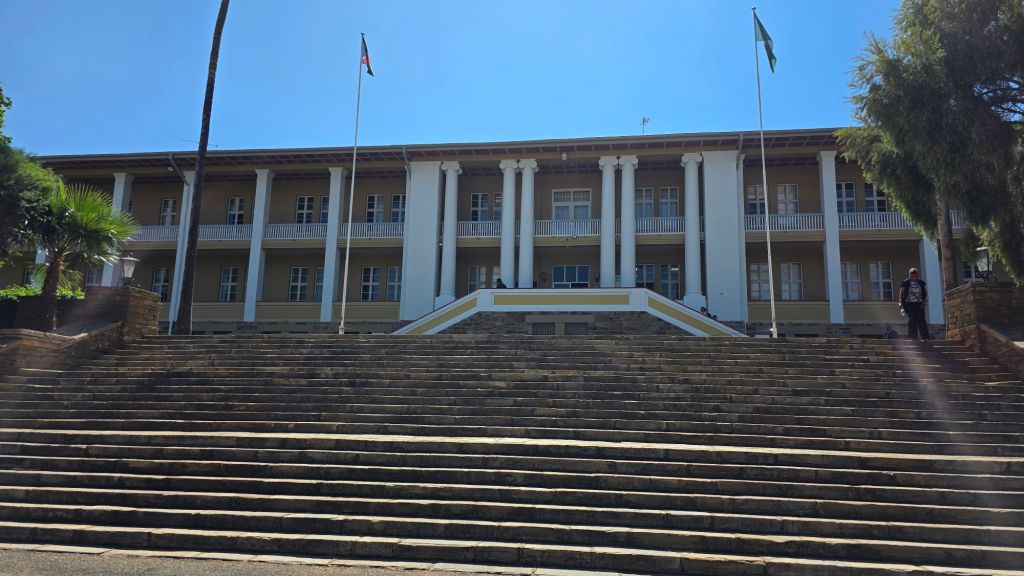
The Ink Palace is the name given to the Parliamentary building. Built in 1912, using forced labour from concentration camps under German occupation, it gained its local name due the extensive amount of ink used by workers in the building.
Parliament Gardens
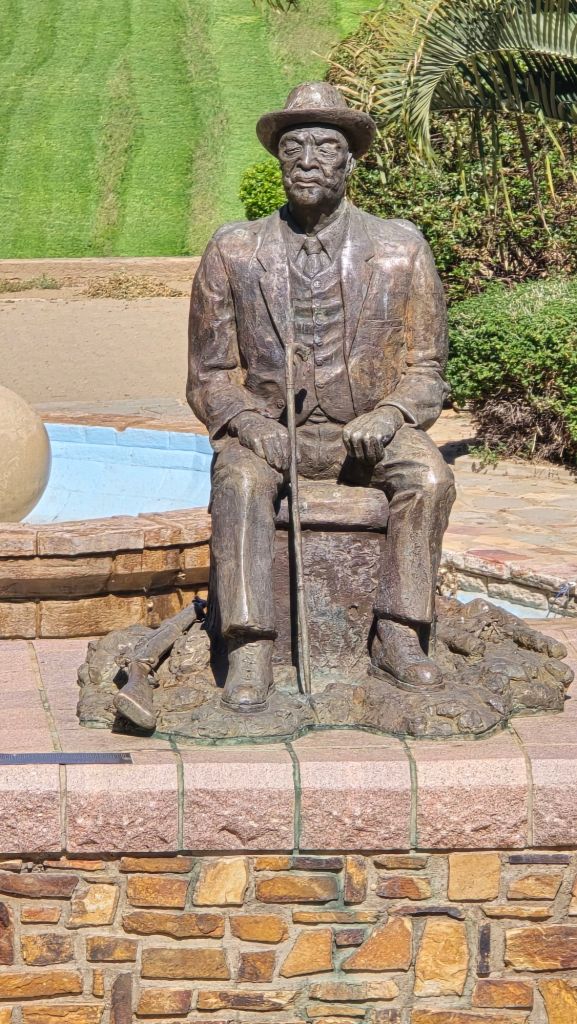
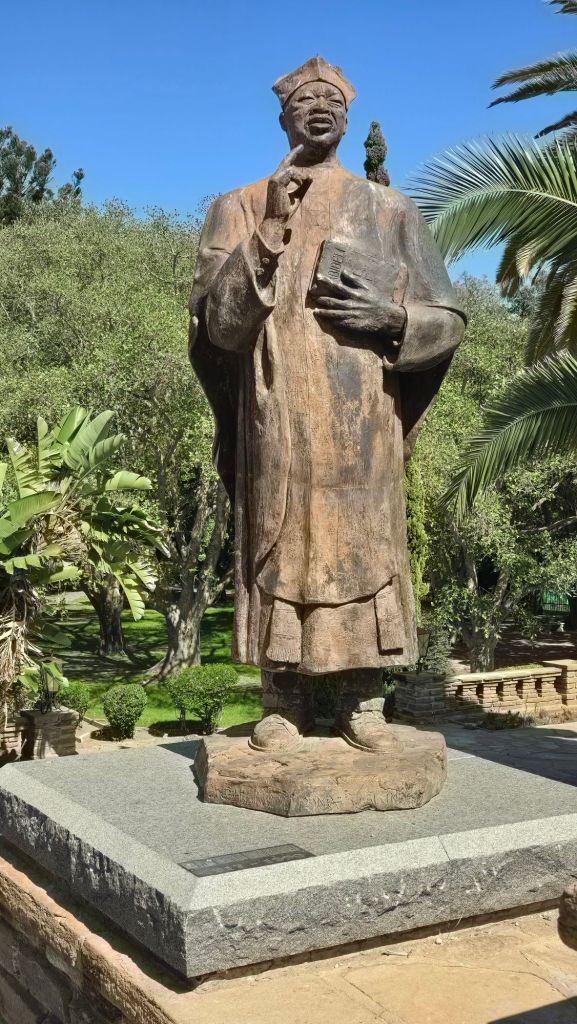
Parliament Gardens surround the Ink Palace and are open to the public, as a well-maintained public open space. The park pays homage with monuments to some notable people from Namibian history and its fight for independence.
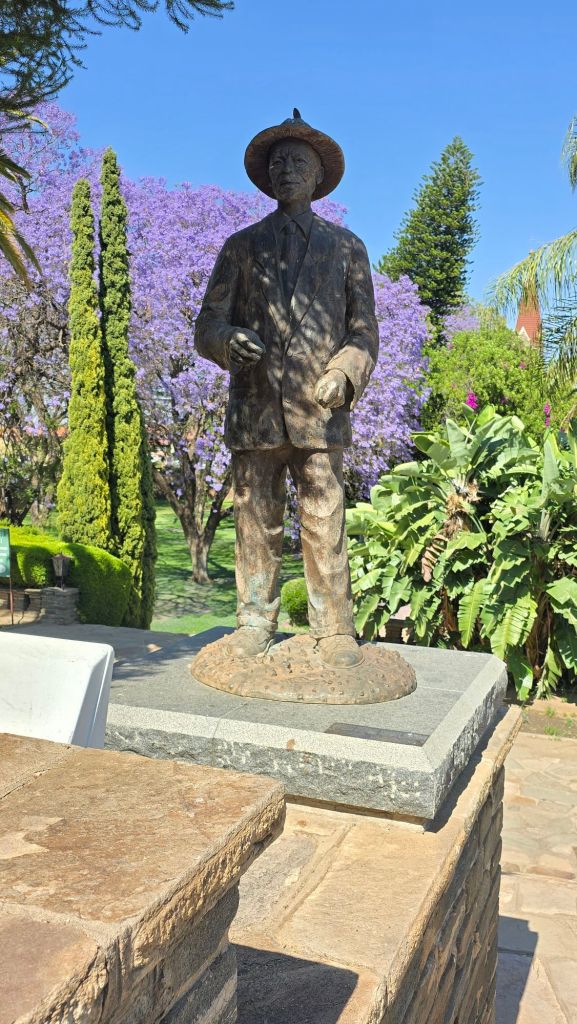
Hendrik Samuel Witbooi was instrumental in the Namibian fight for independence from South Africa; Hosea Kutako was a founding member of Namibia’s first nationalist party, and Windhoek’s main international airport is also named after him; and Reverend Theophilus Hingashikuka Hamutumbangela who was a leading anti-apartheid activist.
The Train Station

The train station is all but a museum these days as it is no longer served by local trains. The ‘Desert Express’ service once transported people away from the city to the coastal town of Swakopmund, and other notable towns throughout the country. But the introduction of interstate buses and improvements to the road network, meant the journey that took 12 hours by train, was halved by buses. The station now serves only a luxury rail service once every 2-3 months.
Katatura township
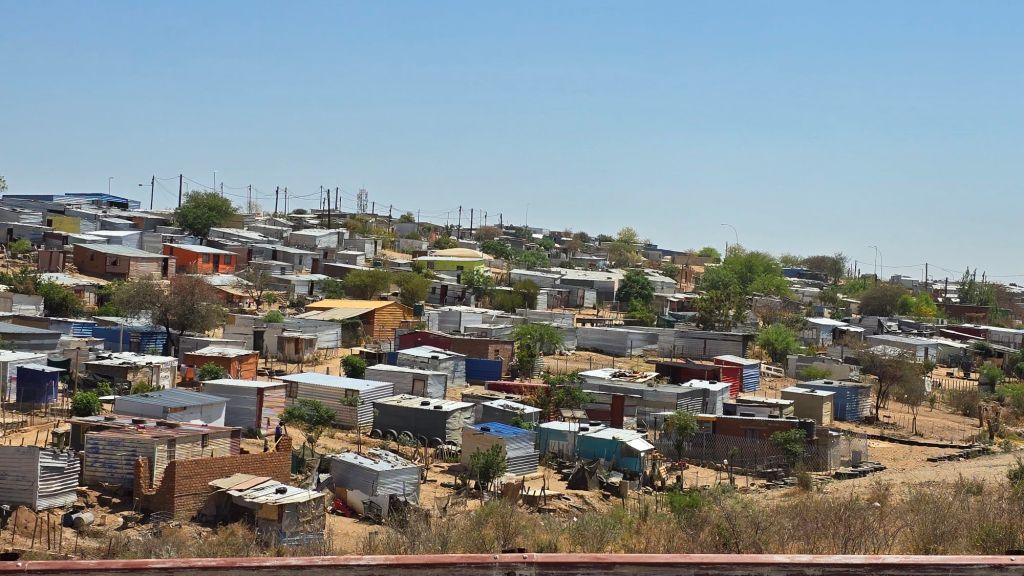
After visiting these areas of interest, we were taken to the edge of the town to see the city’s largest township – Katatura, home to 300,000 of Windhoek’s residents. Created in 1961, as part of the forced removal of the black population into a new location, further from the city centre, under South African apartheid administration, the suburb (Katatura translates to “the place where people don’t want to live”) continues to grow as more people from Namibian towns and villages, and immigrants from neighbouring countries flock to Windhoek seeking work. Housing is simple shacks with water from communal stands every few 100m and communal toilet blocks. Even when gainfully employed, many refuse to leave their community of family, friends and way of life, choosing instead to just improve what they already have – building brick shacks to replace the corrugated tin shacks. Apartheid was abolished in Namibia in 1975, despite remaining under South African administration until 1990. The current population is made up of 11 ethnicities who, despite the glaring differences in wealth, live in harmony, with no racial tensions. When asked, our tour guide said the only thing he’d really noticed about gaining independence from South Africa was that Namibia gained an extra holiday, and they changed some road names.
Joe’s Beerhouse

Our visit to Windhoek almost over, there was just one more place to visit – the (in)famous Joe’s Beerhouse. No matter who you speak to, the number one recommendation is here, but it’s not for the faint-hearted and vegetarians would be hard-pressed to find something to eat. Namibia is a meat-eating nation and with game a-plenty, the menu is full of local choices. Phil opted for a trio of game (zebra, kudu, and springbok), whilst I had springbok medallions.
The place is full of locals and tourists; families, couples and groups of friends – all are catered for. The food is top notch and generously proportioned, with a good selection of local and international beers, wines and soft drinks to wash it down with – all at affordable prices. Nothing has been overinflated to match its popularity (£40 for a 2-course meal for 2 with beers – and we didn’t go for the cheapest options). The only problem is, we can’t make a second visit!
 TheWanderingWains